2019: Two Hundred and Thirty Nine

Today was a good day, right up till the end. I floated around campus post lunch, moving around from the library to my room, and past the mess and the multipurpose store quite a few times – which made me feel like a first/second year again. I think it was in my third year that I started to plan my day based on the economics of how much I would have to walk that day. The lazies got to me. But I’ve changed now; time has come full circle, and I I’m not too bothered by having to walk around because my day takes me places. A large part of this is due to the fact that my laptop is the lightest its ever been, and I’m more okay lugging this around anywhere than I’ve been in past years.

It also reminded me of how lost I was on this campus in my first few days here. I was willing to go anywhere and see anything on campus (not like there’s a whole amount), but if you told me to do tasks at multiple locations – I’d be game for it. I wouldn’t feel the crushing weight of walking in the humidity. I’d just feel the joy of being here. I’m experiencing that these days more than ever, and I think my body is glad for it. Walking is good exercise.

I also debated after absolute ages on campus. By which I mean the first time in this semester. It was also the first time I interacted with a first year – and that’s something I’ve been trying to do since I got back. Debating was really, really fun – not just because we debated after a while, but also because all the 5th years came. At some point or the other, we were in and around each other and around debating again. It’s what this entire weekend is going to be and I’m so unbelievably excited for it.

So yes, all was well. Till I returned to my room and discovered the electricity ports had stopped working.

I will now try to fix it, and pray the electrician comes tomorrow, while conserving battery everywhere on campus barring the library.
The Books behind the Movie: Beautiful Boy

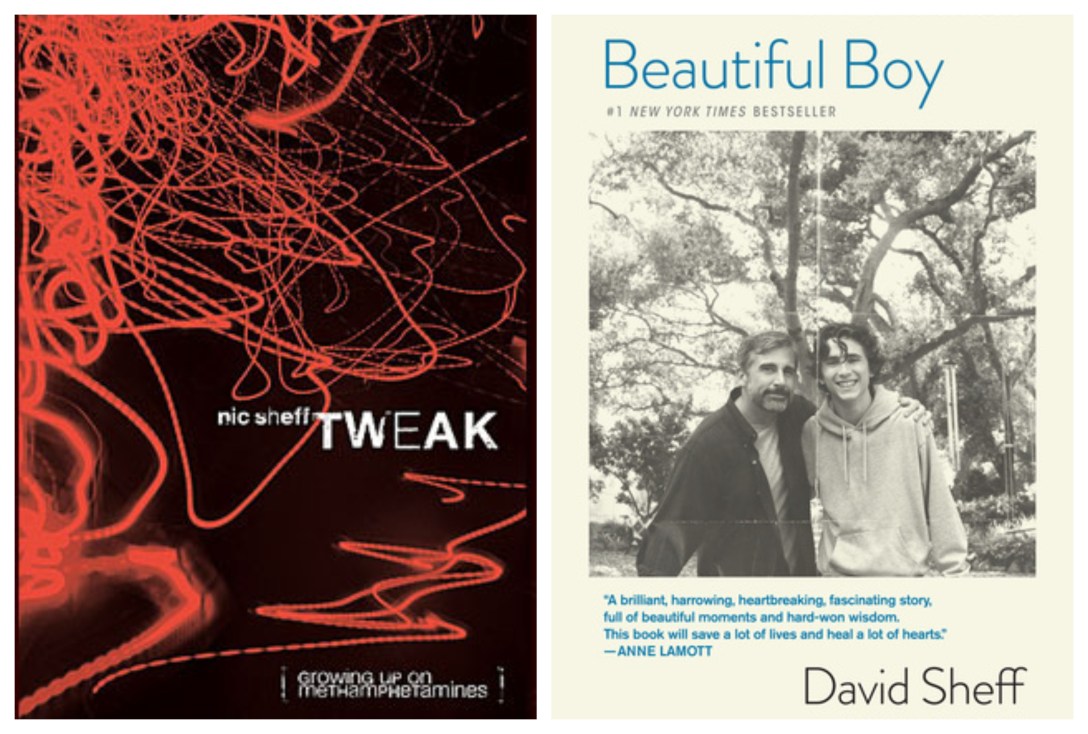
Beautiful Boy: A Father’s Journey Through His Son’s Addiction
by David Sheff,
Published by Mariner Books (2007)
Rating: ****

Tweak: Growing up on Methamphetamines
by Nic Sheff
Published by Atheneum Books for Young Readers (2008)
Rating: ***

I first heard about the Sheffs’ story when I saw the trailer for “Beautiful Boy”, starring Steve Carrell and Timothée Chalamet. The trailer had me hooked. I was intrigued by the father-son relationship, and when I found out that there were two books, one written by the father, and one by the son – allowing you to see two perspectives to the story in realtime, in first-person narration, I just had to read them. I read both back-to-back one evening, gripped by the experience, the grief, the love, and the story.

Nic Sheff writes about his own exposure to drugs and alcohol and becoming addicted to meth. David Sheff writes about watching his son getting exposed, and his own exposure to his son – when he was high, and the struggle in loving someone unconditionally. Nic’s own narration is factual, it reads the way an autobiography would – outlining anecdotes and emotional responses, with a lot of reflection about these instances. David’s narration is largely emotional – dealing with the anguish of conflict and confrontation with his own child, and feelings associated with uncertainty about his son’s whereabouts and activities.

These are gripping reads, both of them are. I admire their willingness to share this very, very personal story. David Sheff is a writer and journalist, and the writing flair comes across almost immediately, permeating through the book. Nic’s book, on the other hand is slightly less refined, in quite a few places. It would, however, be absurd to draw conclusions without reading both accounts of the same experience, which is what pushed me to get through the writing, in parts where I struggled.

After reading them, I watched the movie.

I think that’s when the impact of the books really hit me. This is a very real story. It’s people’s lives, told out – in their messy glory. I’m not an addict, and I’m not certain what kind of impact this kind of literature has on addicts themselves. But it’s someone’s personal account, and I think that’s valuable. For me, as a non-addict, it got me to grasp at how grave the issue can get, and the kind of conflict you might go through if you’re in close proximity with someone who suffers with addiction. It also taught me about the different kinds of rehabilitation processes that exist in response to addiction, and the kind of things one might go through while using those facilities and processes. It got me to understand addiction from a fresh perspective, which I’m grateful for.


2019: Two Hundred and Thirty Eight

And we’re back to another week of classes, which means I’ve now completed a whole week of being at University as a fifth year. Today we had another synopsis due, which has meant a barrage of fifth years in the library, hunched over their laptops, figuring out how to best procrastinate the work, yet to ensure submission by midnight – before the deadline elapses. Some useful tips for this: take a bath. You’ll feel refreshed also, before you work.  I don’t think we’ve been this serious as a batch about any of our internal evaluation submissions. That’s saying something.

This week also marks the build-up to the intervarsity debate we host on campus. For me, it’s one of the years’ highlights. The mood is chill, the weather is great, and we always end up creating a memory around that edition. One year it was dinner unavailability, another, it was having to shift around logistics because it was absolutely pouring. Its a wild time on campus, and nothing ever compares. That’s because no amount of planning can lead to a glitchless TGD, which means for the three days, most people are on their toes. Logistics does a fab job of this. I’m usually on the tab team, and I am this year as well – which means my role is slightly restrictive, but, I’m looking forward to the entire tournament this year. It will be our OLTGD, so we should enjoy it. By all means.

In other news, mess food is back to being intriguing in taste. That wouldn’t have been a problem had I not experienced eating my own food for a month. See, when I made food, I knew what was going into it. So even when it tasted off, or it tasted funny, I could justify why it tasted that way – or what weird powder combination had ended up in an odd-tasting curry, or a bland, saltless dal. Unfortunately the same cannot be said of mess food. Never fear, for I think mess food must be enjoyed this year as well. It will be another 6 months before we are free of the Mohani chains for a while – and thus, must appreciate the nourishment they provide while we can. For me, I think my strategy is going to boil down to portion control. And mixing it up by ensuring I’m eating different things at each meal (versus dal and rice when I get bored of the food).

There’s no complaint here. I am zen.

2019: Two Hundred and Thirty Seven

Contrary to everything I posted yesterday, today, I spent my entire day in my room. Sundays I think are meant for that. Not having to stir much out of the bed, but still managing to get things done.

One of my goals for this academic year is to get back into cultivating habits I’m desirous of carrying forth beyond my University years and out into the real world. These include how I’d like to be in more control of my time right from the start of the day – instead of gaining control only around 7pm-8pm and working really well at night to finish off everything I’d like to before sleeping. Another one is to get back into the habit of making music, and spending time with my music the way I used to before school.

The one thing I’m pleased with is that my love for music hasn’t diminished. Just the way I engage with it has now changed. I like finding new pieces of music, so I strive to listen to new songs everyday, only slipping into loops and old habits when I’m working so I can revel in the comfort of known lyrics and tunes to hum along to while focusing on getting things done. But there’s a different kind of thrill that comes with figuring out a tune that you like, and knowing that it’s your own work that’s going into it.

I remembered last evening that there were a few juniors who were interested in similar things, and called one of my friends to my room to chill and figure out how to actually go about making this happen. I can’t describe to you what it’s like to find someone who shares similar music tastes and interests as you. I experienced it once back in Grade 11, which led to one of the most wholesome friendships I’ve ever had. I’m hopeful that this project will allow me to make music that helps me remember my University when I leave.

Other than that, I spent the evening doing mundane things like laundry and setting up for the week.

The Forest of Enchantments | Chitra Banerjee Divakaruni

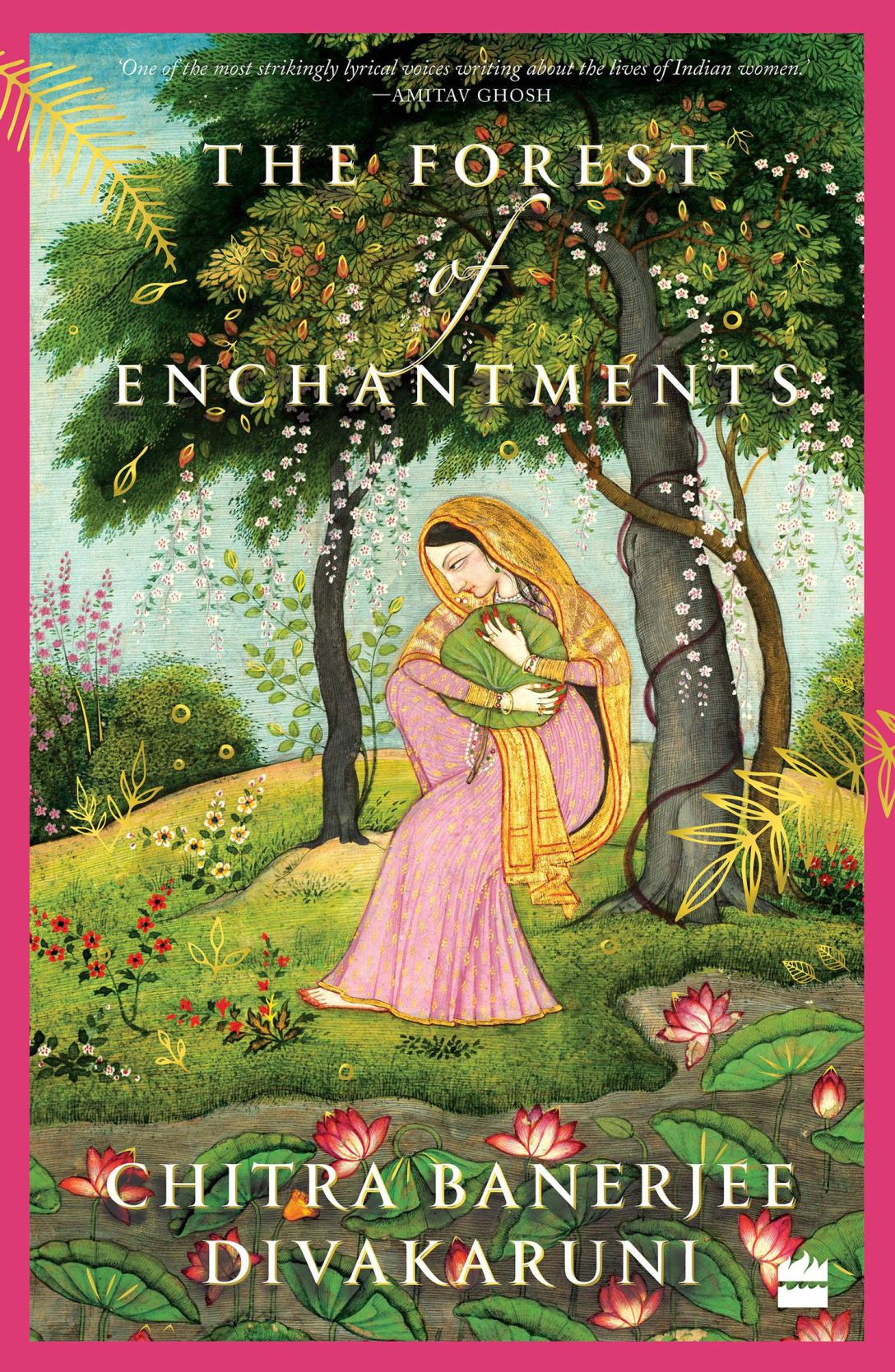
The Forest of Enchantments
by Chitra Banerjee Divakaruni,
Published by HarperCollins India (2019)
Rating: ***** 

I’ve had a soft corner for Divakaruni’s writing since I first came across her work, and the projects she undertook – retellings of Indian mythology. It was this premise that got me hooked almost immediately. Coupled with her simplistic writing and excellent narration, it sowed the seeds for criticism I had of Amish’s later works. Retellings of Indian mythology often suffer from an attempt to try to force new elements of plot onto the reader, or to surprise the reader with information that wouldn’t ordinarily fit into the original tale. Divakaruni does surprise you, but her surprises feel organic, and they align comfortably with characters goals, ambitions, and weaknesses from the original epics – making her retellings believable and more human.

The Forest of Enchantments is no exception. It marketed itself as a retelling of the Ramayana from Sita’s perspective, but the book evolved into so much more as the plot progressed. I believe the book is an exploration of the Ramayana that gives the characters a human voice. The plot is the same as Valmiki’s Ramayana, barring a few surprises when Sita is in captivity. The perspective that Divakaruni offers, however, is one that makes the story a lot more enjoyable. You realize quickly that it is the women of the Ramayana who are ignored throughout the story, and the men who drive the tale with their decision-making and their alpha nature.

Divakaruni plays this to her advantage. It allows her to show the male characters in clear shades of black or white, with decision-making and emotional responses akin to the original epic. However, it gives her the freedom to build on the female characters. Sita, Mandodari, Kaikeyi and Surpanakha. We get to see the shades of grey, the emotional responses that make us, humans, who we are. As Sita is enamored by Ram, so are we, but as Sita agonizes and is frustrated by his decision-making, we are too. We are afflicted by the pangs of desire that Sita’s heart feel. Divakaruni shows us that at the heart of the Ramayana was a love story that forced a constant choice between duty and love.

The most poignant moments come at the end of the book. For me, the conclusion of the book makes it a must-read. The injustice Sita feels has been done to her comes to its fore, and you can relate to the range of emotions she experiences. That’s why this book is beautiful. As compared to the stoic tale the Ramayana is, there’s colour here. The rage of red, and the ache of blue: they’re all portrayed perfectly. I was left pondering how far we go for love, and what love actually deserves.

Some additional comments are reserved for the beautiful cover of the book, and the incredible typesetting. I haven’t been this enamored by a hardcover for a while now, and it will take quite the book to top this one – in terms of look and feel. This is a highlight of my year, and will prompt more reading into Indian mythology, I’m sure.

Feluda | Satyajit Ray

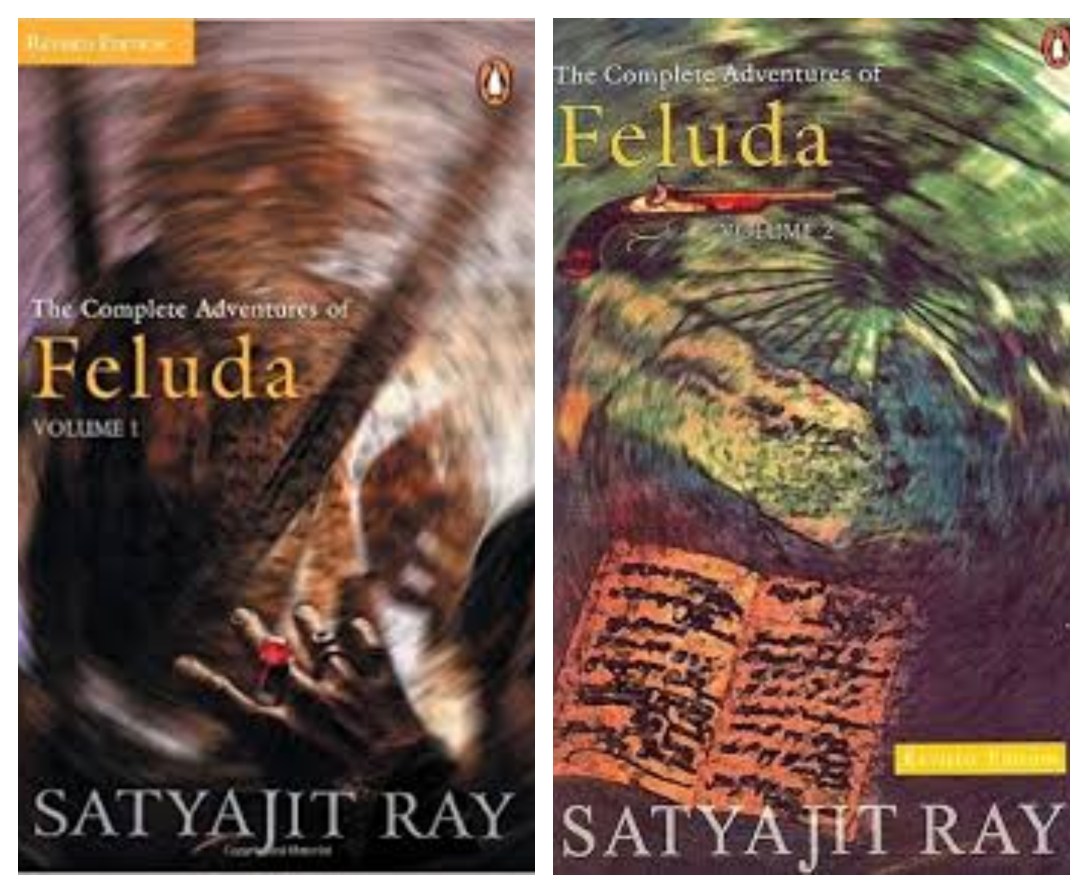
The Complete Adventures of Feluda (Volume 1 and 2)
by Satyajit Ray
Published by Penguin India (2005)
Rating: ***** 

I hadn’t read Faluda till this day. Only ever heard of the character, and watched some of the movies while channel-surfing. This is despite my love for Satyajit Ray, to whose work I was introduced in Grade 6 by my school. When it came up for discussion with friends, a close friend was particularly shocked by this gap in my reading, so I proceeded to fill it immediately. Thankfully, these omnibus works, in chronological order of publishing were available, which made the task a lot easier than I anticipated.

The superlatives used by the public describe Ray’s writing and creative ability are words I will try to avoid repeating. I’d like to focus this review centrally on Feluda and the kind of feelings reading a narration of his adventures invoked in me.

As a child, I was a huge fan of mystery and detective books. Enid Blyton was huge, so my parents started me off with the Famous Five and Secret Seven, and moved me through to Nancy Drew and the Hardy Boys before I leveled up to Sherlock Holmes and Agatha Christie novels. When I Googled Feluda, several Indian readers had left comments on various reading threads that one would enjoy these stories if they were a fan of the aforementioned series. Having read the series though, I have to admit that I agree, but only to an extent.

You don’t need to be a mystery-aficionado to read Feluda. Nor do you need to have a fondness for Indian literature. Ray’s portrayal of the character and supporting crew transcends genres.

There are three primary characters. The narrator is Topshe, or Tapeshranjan, Feluda’s cousin. He is younger than Feluda and chronicles all of Feluda’s cases in detail. The device works very well, and perhaps one of the rare cases where a young narrator is not irritating. Feluda, of course, is the detective who loves riddles and puzzles and is smart and intelligent. He is well-read and enjoys having different experiences. Lalmohan Ganguly aka Jatayu is their friend and accompanies them everywhere on their cases. He is a famous writer of mystery stories and gets his ideas from their trips and investigations. Their interaction makes for half of the stories’ delight, and each character is given their own moment to shine, although Feluda is whom the spotlight remains firmly fixed on.

I think the beauty of these stories is that they were intended for a younger audience in the 60’s and 70’s. Today, that allows the stories to evoke a strong sense of nostalgia. Ray’s writing clearly invokes Doyle-ianism at several points of plot, right down to missing jewels. However, at no point do these stories pretend to be a Sherlock Holmes mystery. Deep-rooted in Indian references and language, their setting, across the breadth of India, allows you to explore parts of the country that wouldn’t ordinarily come up through a trip – like Gangtok. The second volume shows an evolution in this, with some foreign travel involved, but remains true to the Indian experience, showcasing those travels through an Indian lens as well.

To put it simply, these stories are fun. I now know that I have more stories to read if I’m ever in a slump. They’re enjoyable and feel-good. And that’s what I love most about them.

2019: Two Hundred and Thirty Six

I spent my day at the library today, getting things done. It’s final year, which is giving me added motivation to spend my days outside my room. Fourth year got a little uncomfortable in multiple ways, but everyone is more chill this year. I am too. Plus, the library has AC, so rediscovering its comfort is something I’m keen on doing. I know my semester and year has only started, but I want to make sure I’m always aware of the fact this is my final year as an Undergraduate student – so I can make the most of every minute I spend here.

The library is a great place for that. It’s seen some of my favourite memories from the past four years. I feel safe there. Always have. It’s my favourite place to be when it rains on campus,  because you’re shielded from the sound and sight of the rain – which makes you feel like it isn’t too mucky outside.

If only it was closer to the hostel.

2019: Two Hundred and Thirty Four

The ICC World Test Championship has just gotten underway. I say this about half a month late to the party, but for me, it’s only just begun because I’ve discovered that there are multiple test matches happening. That entertainment, coupled with the uncertainty of results affecting points tallies and positions in the Championship means that this should be a good thrill for the time it lasts. I hope it revives the interest in Test Cricket, which I believe is honestly one of the best sporting formats I’ve seen.

It’s so enjoyable. One day I want to attend all 5 days of a match at a packed stadium. The Ashes seem like the best bet to do that, but I think India v. England, or India v. Australia are also good shouts.

If you’d like a brief idea of how this works:

https://www.youtube.com/watch?v=ponOdp1qzCw

My only qualm with this approach has to be the fact that its restricted at present to the Top 9 teams, which excludes the opportunity for teams like Afghanistan and Ireland to play high levels of Test Cricket.

Associate Nations without Test status also suffer – since a majority of attention might now go to this Championship. Maybe a promotion/relegation system might work out better – but lets see what the ICC decides to do.

2019: Two Hundred and Thirty Three

This life of having classes only for three hours on a given day is extremely convenient. Classes end at 12:20pm, and I have a 15-minute break in the middle of the three classes I need to attend. All of this leads me to one conclusion. After making attendance difficult, University is pampering us before we head out into the real world. These timings reflect nothing that’s out there. So I will enjoy every single minute of it, and not complain, because I will never want any change to this. I’m looking forward to the next one year with this timetable.

Classes are also fairly uncomplicated. A bit of it is naturally a result of the kind of experience we’ve built up in the last four years of attending five hours, but these are easy to follow. I look forward to going to class each day because I know I can be back in my bed within three hours.

Since the junior batches are writing midsemester exams, campus has been pretty quiet in the evenings – which is a strange starting point to come back to. Can’t wait for them to be done so every time I step out of my room, or anywhere in the hallways, there’s just a cacophony of sound.

2019: Two Hundred and Thirty Two

Another day has gone by.

Settling down has gotten easier as time has passed. That’s for sure. Getting the room cleaned doesn’t feel like a struggle. I walk around and I see familiar faces. I know where to source things that I need.

Another day of this and I think I’ll be ready to hit the ground running. Routine & everything. Hardcore.

Till then, I’m going to watch Veep.