Reading the Obama White House

Introduction

In the past 4 years, since Donald Trump took over the Oval Office, I’ve been intrigued by the circumstances that got him there. I’ve missed having President Obama in power. There are only a handful of instances where the policies and politics of America has a direct impact on my life as an Indian. I’ve missed having President Obama because of the optics of everything and the image he projected of America. There was a quiet, commandeering strength about him, as opposed to the 3am twitter updates that President Trump (still not used to this) offers up. The result of this has been a lot of reading about America, and about Obama himself – and what the White House is like and what it represents. I was interested in understanding how Obama forged a White House in his image, and what Presidents do once they leave – which set me forth on a journey in reading several books. I’ll leave ratings and links to these books below, but here are some things I observed that were common through these narratives.

Most of these books are memoirs written by former Obama White House staffers. A few disclaimers:

  1. There are more books describing the Obama White House I haven’t read;
  2. I have read books presenting arguments which criticize the Obama White House; and
  3. I have not read books about previous White Houses. My experience with the other White Houses come from History reports and pop culture.

The Books

  1. Ben Rhodes – The World As It Is: Inside the Obama White House – *****
  2. Dan Pfeiffer – Yes We (Still) Can: Politics in the Age of Obama, Twitter, and Trump – ****
  3. Alyssa Mastromonaco, Lauren Oyler – Who Thought This Was a Good Idea?: And Other Questions You Should Have Answers to When You Work in the White House – ****
  4. Katy Tur – Unbelievable: My Front-Row Seat to the Craziest Campaign in American History – ***

The Stories 

I loved reading through each of these because they portrayed an incredibly personal narrative of some of the most defining moments in the last few years under Obama’s presidency and during the 2016 Elections. There’s a ton of insight that would have ordinarily been available only if White House staffers were entitled to maintain personal twitter feeds during their time in the White House.

Alyssa Mastromonaco and Dan Pfeiffer write the books that will make you laugh about Obama. Everyone knows President Obama had a great sense of humour, knew how to make people smile (and when), and both these individuals tap into a goldmine of memories they’ve created with Obama front and center to tell you the kind of things you wouldn’t have expected from the Commander-in-Chief, including comments on people’s wardrobes.

If Mastromonaco and Pfeiffer write about Obama the person, Ben Rhodes takes Obama the professional and gives you insight into that separation of powers (do you see what I did there?) Something I’ve wondered about is the kind of toll that certain decisions and politics takes on the personal lives of those in power – and how personal lives actually unfold with so much chaos and noise all around you all of the time. Rhodes tackles this issue-by-issue, almost – constructing a wonderful timeline of everything Obama & him experienced in the White House. In each chapter, Rhodes explores what Obama the President and Obama the person felt – where they coincided, and where they separated, and the burden this placed on him. At all points, the book exudes this warmth that Obama clearly imparted on all of the members of his Service – individuals who still feel privileged to have been a part of things.

And if Rhodes gives you that insight, into that warmth, Katy Tur is able to write about the exact opposite – the narrative that Trump was able to tap into in order to unite the country not through action, but through words – none of which exuded warmth and inclusion, but exclusion at its highest.

Concluding Thoughts

These make for good reads if you’re interested in the changing face of American politics. You’ll take to them far easier if you have bias, I think – as with most pieces of literature. My bias shines through here.

A Life, Lived | Stoner, by John Williams

Introduction 

My weekend has been filled with reading and books, which is just the weekend I needed to recover for the week that lies ahead. On Friday, I spent a couple of hours on Goodreads, trying to figure out the stuff I wanted to explore and get through by the time Sunday night rolled around. Stoner was a fresh find, an indirect find, so to speak. I saw a book about John Williams’ life – a book that described itself as an essay about why Stoner was the perfect novel, and I was intrigued. I’ve only ever heard of the name John Williams in the context of film scores, so to hear that there was this celebrated novelist I knew nothing about who seemed to have a cult-like following for this “perfect” book, I had to read it. Thus it was that I sat on my desk last evening after a scrumptious meal and I made a new friend: William Stoner.

Also, no, the book is not about weed.

Plot Summary

John Williams navigates you through the life of William Stoner, a lifelong academic and a Professor of English at the University of Missouri. You’re introduced to Stoner posthumously in the first chapter – an introduction that lays down clear benchmarks for the kind of expectations you should have from the book. Williams tells you in no uncertain terms that Stoner was an ordinary man, who had an ordinary career – who did nothing extraordinary. Over the course of subsequent chapters you learn about Stoner’s upbringing on a farm, and you’re transported through the different phases of his life and the different decisions he takes – in finding love, in working on English Literature, in understanding the impact of war. It’s really an unremarkable plot. Quite simply put: it’s one man’s journey through life.

The writing, however, is incredible.

Characters

It’s pretty evident from everything I’ve said above that the character: Stoner, is central to the entire plot. He drives it forward, slows it down, and brings it to a close. Some books which place a singular character at their center, or a singular perspective at the forefront struggle because they don’t establish the character’s voice early on. As a result, expectations are wayward. Williams does this remarkably well.

First, he stays away from writing in the first person at any point. The entire book is told in third person, giving the author more control over the kind of observations he is able to fit in about Stoner’s life – about Stoner’s temperament, for example.

Second, Stoner is set up very, very early on in the book.

You can tell that he’s in for a life of hard work and challenge. This isn’t exclusively because of the description of his farm-upbringing. Williams also achieves this end by labouring through descriptions of Stoner’s entire thought process. When, early on, Stoner is faced with the decision of going to school or continuing to stay on the farm – Williams doesn’t cut to the chase and reach the outcome (Stoner goes to University). Instead, Williams explains everything that terrifies Stoner, what excites him – and why he ends up acceding to his fathers’ pushes. For me, as a reader, it helped me understand Stoner’s motivations, but it also laid out how much thought (sometimes fruitless) the character put into everything he did. Thinking is hard work – and setting up a character who ponders deeply about everything, who doesn’t fully comprehend or rely on intuition early on in the book sets him (and you, the reader) up for everything that you’re going to see.

Third, supporting characters are eased into the story in small batches. Williams makes it clear that the focus is never supposed to be away from Stoner. Even when the scenery changes – like when Stoner moves to University, or the times change – like when World War I breaks out, Williams doesn’t introduce more than 2 characters into Stoner’s life arc. This clarity of writing allows each individual’s character arc to develop fully (only one character is written out early – killed in action), but more crucially, it allows Williams to lay out, slowly, Stoner’s dynamic and interaction with each person. That enables them to be more organically involved in Stoner’s life. This is best illustrated not through Edith, but through Gordon Finch. Finch is introduced as a friend. Stoner and Finch get on really well – exchanging observations about University life that you’d only ever exchange with your closest peers. Finch disappears, enlisting for the war, and returns in an administrative capacity more senior to Stoner. However, their rapport doesn’t change – and lasts right through to the end. Now, Finch was introduced with another character, Masters (the character who dies young). In my view, settling on a small group reflects the reality of the life of an academic. More central to the argument I was making though, is the fact that it allows for the development of more meaningful interactions with these characters – which keeps the spotlight on Stoner. As the reader, you’re rarely caught onto picking a favourite character: you’re firmly on Stoner’s side, interested solely in the kind of relationship and impact each character will have on his life.

Conflict

After I read the book, I went on to read a few essays I mentioned earlier – about why Stoner was the perfect novel, and they all point to the way conflict is explored. Each one of them highlighted how conflict was introduced at exactly when it needed to be in Stoner’s arc.

While I agree with that, I think some nuance exists in the kind of conflicts introduced. There are the big conflicts: the one with Lomax, the affair Stoner has and the conflict with Edith, the conflict when he tells his parents about continuing on with his studies in English Literature. However, conflict remains a central theme throughout the book – one that shouldn’t be ignored. Williams’ success doesn’t lie exclusively in the fact that he is able to introduce these big conflicts at the right time.

To me, a large portion of that success is owed to the lucidity of his writing of an internal monologue and the internal conflict that Stoner faces almost on a daily basis. We’ve explored this in the above section – on how this helps set up Stoner’s character. Here, what I’d like to concentrate on is the role of this internal monologue in those bigger conflict arcs.

I shall illustrate this through the conflict with Lomax (the conflict with Edith has too many layers and will give away too much of the book). Professor Lomax is another faculty in the English department who Stoner has several scuffles with, climaxing in the big scuffle regarding whether a particular graduate/doctoral student should receive passing marks in his oral examination. Now, while this entire scuffle could have been projected through the single dimension of being an indirect power struggle in the department between Lomax and Stoner, a large amount of the conflict’s introduction takes place through the internal monologue.

Stoner first notices this student when he sits for a graduate seminar Stoner teaches – and Williams elaborates Stoner’s thoughts at the start. In fact, Williams creates a narrative of doubt through every interaction that Stoner has with the graduate student – which culminates the introduction of the conflict with Lomax. Without these deliberate portions of the narrative devoted to exploring Stoner’s internal dilemma about how the student in question has been admitted, the larger conflict loses value. More importantly, what Williams is able to achieve is the opportunity to introduce a counter-narrative and a counter-characterization that is equally powerful by allowing Lomax to replay the entire monologue from a different perspective.

It is a phenomenal lesson in storytelling.

Concluding Remarks

I recognize that a large part of my analysis may not make sense without a reading of the book. Hence, please read the book. It is short and well worth any time you may have. The Guardian wrote about how the book had a ‘sad tone’, and how Williams himself was confused at why people thought Stoner led a sad life. I have to agree. There is a sadness to Stoner, but there is also joy – in equal part. Remember, Stoner’s life is ordinary. It is relatable. Therein lies it’s power.

I loved the book. As someone contemplating a career in the academy, this was just a beautifully told tale of someone determined to teach, and to love, to the best of his capabilities – while making mistakes along the way. A life truly lived. Another great book I’ve read in 2020, earning ***** (5 stars).

Old Dog, New Tricks | Play It Again, by Alan Rusbridger

Introduction

First off, I must apologize for the title. I tried long and hard to find something more suitable, but nothing felt quite as right as this did. Apologies, Mr. Rusbridger, if you do read this.

Secondly, some context. This marvelous book was recommended to me by the genie that is Goodreads, thanks not in small part to my recent completion of another book on classical music (which I should hopefully review shortly), and the fact that Year of Wonder is now a book I am currently reading. My own history with classical music is long and storied. It forms a part of a poem, and a blogpost from early 2016. At present, I am falling in love with it all over again. I’ve begun piano classes, I listen to more classical pieces, I’m engaging with my own study of music theory – and I’m enjoying every bit of it. However, it has been 6 years since I properly attended lessons and focused on technique instead of playing things by the ear. As a consequence, my dexterity is something I am relearning. In that sense, finding this book felt like more than a coincidence. My review might therefore be coloured by this experience.

Plot Summary 

Pretty straightforward really. Rusbridger explains it in a video he recorded, which you can see here. In a series of diary-style entries, Rusbridger recounts taking up the challenge to learn and play Chopin’s Ballade No.1 in G minor Op. 23, which is one of the most daunting pieces of music ever written. There are added layers to the challenge, though. First, he gave up the piano when he was 16, and took it up as a serious hobby only past the age of 40. Second, he’s got a day-job (and not any day-job. At the time, he was Editor-in-Chief of The Guardian). Third, he wants to learn it in a year – committing to do so by giving himself 20 minutes a day of dedicated practice. To anybody, developing a habit over the course of a year by attempting it for just 20 minutes of a day sounds ludicrous enough. To commit to learning a fresh piece of music – and something that lasts 10 whole minutes isn’t just committing to a habit – it’s committing to teaching yourself something new that develops on past knowledge, which is incredible.

To give you a spoiler alert: yes, he manages to play it, and rather successfully, I might add. There are snippets of his playing in the video I’ve linked above.

The Writing 

I’ve often found that diary-style entries face the arduous challenge of establishing context in as few words as possible before developing plot, or rather, furthering plot in a manner that is engaging, yet succinct. Some preliminary comments on length and style before analyzing the writing itself.

Some books written as journal or diary entries end up writing these extracts at length. They feel well-edited, meticulously-crafted – that the thoughts come in a structured manner, or a structured flow at all points of time. While it is arguable that journal/diary writers do spend time thinking about what they wish to write about, I often feel that there is an erosion of the unfiltered thought that takes place when they are crafted to be literary. There’s a beauty to the natural flow of thought when somebody sits down with a pen and paper to write – the brain hops, skips, and jumps, and you can see that with the writing. It feels organic, and natural, with stops that are as abrupt as these thoughts themselves. There is no doubt to Rusbridger’s talent in the English language (he studied at Cambridge and was a journalist, for goodness sakes’), but what I loved here is that the diary entries never felt too long. While we do not know whether these were extracts culled out of longer pieces of writing from each day, there’s a flow to the book that feels like I could’ve sat and written it at home.

This does two things for me: one, it makes it incredibly easy to read, even when it’s discussing something like the art of choosing which piano to buy – something that is incredibly boring if you cannot hear the tone of the pianos being compared and the subtle differences in tone. Two, it makes the amateur portion of his piano playing feel more genuine. You can see that this is something he is incredibly passionate about – (at least this one project), but having the writing laid out in a very amateur-like way makes it feel more relatable.

Interweaving Subplots and Interviews 

The book would have been incredibly boring to the general public if it was exclusively about him learning new sections of the piece each day, with stylistic changes being described as if you understand everything about how the piano is to be played. It would make for excellent technical reading, and I wouldn’t mind reading that too, but that’s for another day. There’s a lot going on in Rusbridger’s life, as I pointed out. There is success not only in the fact that he does play the piece at the end of the book, but that he doggedly and determinedly ensures he gets in as much practice as possible whenever he finds the time.

It’s evident that he needs to make the time for this hobby. He explains, at different junctures, the WikiLeaks stories, the phone hacking scandals, and other stories – including the rescue of a Guardian reporter from Libya (where he conceives the title of the book). All of this means that pages turn not exclusively because you’re interested in finding out more about his journey with the piece, but also because you’re trying to figure out whether or not he’s succeeding in the other things that are the top of the priority list for the paper and for him.

While that is admirable, what I enjoyed even more was the fact that he presented the art of learning this piece in a very holistic manner. It isn’t him self-learning, or self-teaching the piece. In technicality, once you learn how to read music, you can pretty much learn how to play anything – for playing sakes’. It’s clear that he doesn’t want this. He enrols in regular lessons, which you can see changes his perspective on the piece by giving him an observer to play to every time he visits. There are nuggets of information from professional pianists whom he has the opportunity to spend time with (as a result of his day-job), and all their interpretations offers him with the chance to look at the music through his own eyes – and reflect in the music a story that he connects with, which I think is beautiful. He also speaks to neuroscientists to understand the art of memory and learning an instrument better in an attempt to figure out what the easiest way to commit the piece to his brain would be.

All of this portrays Western classical music and its performance as being so much more than the random notes and squiggles on a staff. Indeed, in various moments, Rusbridger taps into his historical knowledge to offer different views on the context and meaning of Chopin, which I absolutely adored.

The Personality 

This would’ve also been a little less interesting if the writing didn’t allow the personal side of the story to shine through. I’ve stated above how personal the challenge itself becomes, but Rusbridger takes that one step forward, involving the reader in several aspects and decisions he’s taking on the fly. This includes the fact that he ends up building a music room in his house, he buys a piano, and he attends a couple of amateur piano conferences. There is humour interspersed in his own reflections of the kind of mountain he’s trying to climb – all of which really allows you to see who Rusbridge is beyond this singular focus he has for a year.

Conclusion

Listen to a performance of Chopin’s Ballade. Then read the book. It’s a wonderful exposition of how immersive classical music, or any hobby can be really. For me, it’s deepened my own resolve to learn the piano to enjoy it as much as I possibly can, given the history I’ve got with the instrument. It’s also convinced me that I can learn new things at any age, and I’m never going to be dissuaded by my age as an excuse to learn a skill I’m interested in. Without much doubt, this book earns ***** (5 stars).

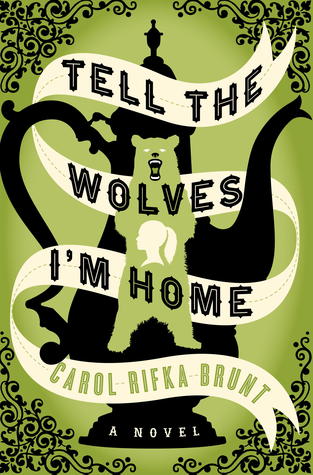
Tell the Wolves I’m Home | Carol Rifka Brunt

Tell the Wolves I’m Home
by Carol Rifka Brunt,
Published by Random House (2012)
Rating: **** 

This is a very touching tale. It was a good pick after Black Leopard, Red Wolf – especially because of the kind of emotions I was left it at the end of that book, the eerie, not so optimistic kind.

The book itself is very layered, but centers itself around a singular premise: grief. June is forced to cope with the death of her beloved uncle Finn, a gay man in the 80’s who passes away as a result of AIDS. She has grown up resenting her uncle’s boyfriend, Toby: a man blamed by her parents for her uncle’s death. June and Toby were also often competing for her uncle’s affection, attention, and time, leading to a complex relationship. His passing forges an unexpected friendship between these two individuals. June’s uncle was an artist, and through discovery of his art, we learn how grief impacts two people close to the departed and the way they share in their sorrows and their joyful memories.

There’s an emotional weight to the writing. Their friendship begins with a posthumous gift that Finn gifts to June through Toby. June slowly discovers Finn’s spirit living on in Toby – who replaces Finn as an uncle-figure in her life.

Rifka Brunt’s writing is enjoyable. The book itself, is wholesome. I’m not left with unanswered questions or unresolved emotions – but moral conflicts that are easily resolved, and a story that feels complete. I docked a star for its simplicity. Things seemed too convenient, for me – and I would have appreciated if June’s voice was a little more suited to her age throughout the book. Often it felt that Brunt purposefully chose a voice younger that June’s actual age, which takes away from the kind of relatability the book enjoys.

For the imagery and the symbolism, and the description of grief and friendship, this is worth reading.

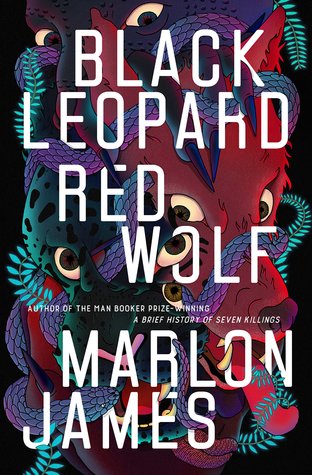
Black Leopard, Red Wolf | Marlon James (The Dark Star Trilogy, #1)

Black Leopard, Red Wolf (The Dark Star Trilogy, #1)
by Marlon James,
Published by Riverhead Books (2019)
Rating: ****

This is a book that proclaimed to be an African Game of Thrones. Its publication was pretty timely, given that Game of Thrones (the TV series) was due to end in May, 2019. That comparison, however, would carry the weight of what George R.R. Martin had written through his novels so far, with the conclusion of that series presently awaited. Irrespective of the comparison, which I will address later, I think this is an African fantasy series which I will follow, and I am looking forward to reading the next installment soon. The strength of the writing derives in its ability to blend, uniquely, African mythology and narrative – while staying true to the voice James tries to give his characters.

First, we must address the structure of the tale. We’re introduced to a narrator, and the novel itself begins with one of the eeriest opening lines that come to memory,

“The child is dead. There is nothing left to know.” 

Who is the child? How did they die? Who knew the child would die? Did anyone? Could someone have prevented it? Who says these lines?

We are, almost instantly, introduced to Tracker. We learn he is a hunted, renowned for his skill. We learn, that as with others who are at the top of their craft, he has principles he follows while working. We learn one of these was that he worked alone. We also learnt he broke that principle – learning to work in a group, and searching for a boy. (At which point you wonder whether this boy is the same child referred to above). James structures the novel as a series of chapters where Tracker takes you through a part of the plot, containing an event, or events, or introducing characters and stories which form part of a larger narration. Each of these ends “But that is not the story.”

That structure is pulled off marvelously. Its the first time I’ve noticed such explicit messaging by authors pushing individuals to read the next chapter. But that’s not the only purpose it serves. It heightens a lot of the intrigue, and the mystery, and foreshadows the ending beautifully – for you’re always left in wonder about what James’, (and Tracker’s) endgoals are. The unpredictability served me well.

This is very dark writing. There’s a lot of violence, some gory imagery, and a lot of opiod description. There’s a malevolence that hangs in the air throughout the novel, which I think is something that’s reminiscent of Game of Thrones. And contrary to what other leading reviews say, I don’t believe that this story lacks subtlety. The reason I say this is because we don’t know what the forthcoming installments in the series will bring – and there could be several plot points, or introduced elements that James chooses to use.

I docked a star because for the promise of description, there’s little to excite the imagination about the forests Tracker lurks. There is description of several things, but not much about the setting – in places where there could be. The other element that made me uncomfortable was the uncertainty with which some decisions in writing were made. There appears to be a lot of confusion, for example, about Trackers’ own identity (his sexuality, for example). If that was a deliberate decision, and I can understand why authors might choose to do that (for it mirrors the confusing nature of the spectrum in reality; and the conflict one often fees), it was written without care.

I hope James fixes that. The latter more than the former.

For everyone else looking to dive into African fantasy or African mythology, and to have your mind absolutely blown by a swarm of plot – this is a book you need to pick up. It will leave you baffled and craving more, and if you’re me – you will spend a night collecting material on African origin stories and mythology.  And then you’ll watch Black Panther.

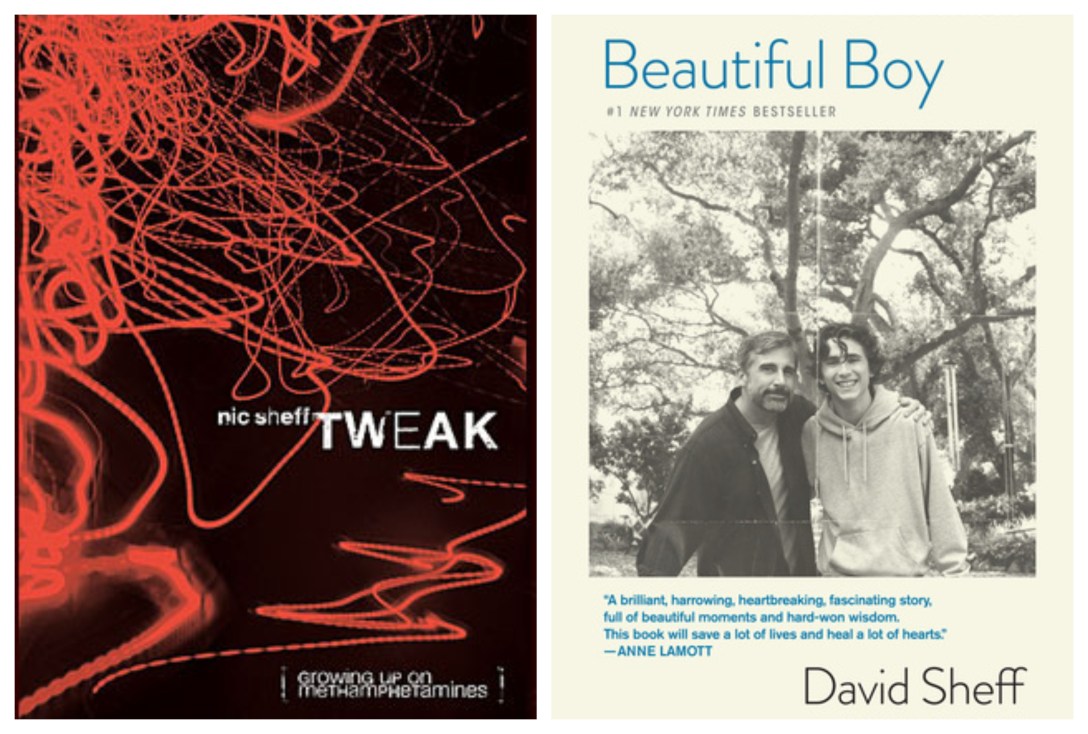
The Books behind the Movie: Beautiful Boy

Beautiful Boy: A Father’s Journey Through His Son’s Addiction
by David Sheff,
Published by Mariner Books (2007)
Rating: ****

Tweak: Growing up on Methamphetamines
by Nic Sheff
Published by Atheneum Books for Young Readers (2008)
Rating: ***

I first heard about the Sheffs’ story when I saw the trailer for “Beautiful Boy”, starring Steve Carrell and Timothée Chalamet. The trailer had me hooked. I was intrigued by the father-son relationship, and when I found out that there were two books, one written by the father, and one by the son – allowing you to see two perspectives to the story in realtime, in first-person narration, I just had to read them. I read both back-to-back one evening, gripped by the experience, the grief, the love, and the story.

Nic Sheff writes about his own exposure to drugs and alcohol and becoming addicted to meth. David Sheff writes about watching his son getting exposed, and his own exposure to his son – when he was high, and the struggle in loving someone unconditionally. Nic’s own narration is factual, it reads the way an autobiography would – outlining anecdotes and emotional responses, with a lot of reflection about these instances. David’s narration is largely emotional – dealing with the anguish of conflict and confrontation with his own child, and feelings associated with uncertainty about his son’s whereabouts and activities.

These are gripping reads, both of them are. I admire their willingness to share this very, very personal story. David Sheff is a writer and journalist, and the writing flair comes across almost immediately, permeating through the book. Nic’s book, on the other hand is slightly less refined, in quite a few places. It would, however, be absurd to draw conclusions without reading both accounts of the same experience, which is what pushed me to get through the writing, in parts where I struggled.

After reading them, I watched the movie.

I think that’s when the impact of the books really hit me. This is a very real story. It’s people’s lives, told out – in their messy glory. I’m not an addict, and I’m not certain what kind of impact this kind of literature has on addicts themselves. But it’s someone’s personal account, and I think that’s valuable. For me, as a non-addict, it got me to grasp at how grave the issue can get, and the kind of conflict you might go through if you’re in close proximity with someone who suffers with addiction. It also taught me about the different kinds of rehabilitation processes that exist in response to addiction, and the kind of things one might go through while using those facilities and processes. It got me to understand addiction from a fresh perspective, which I’m grateful for.


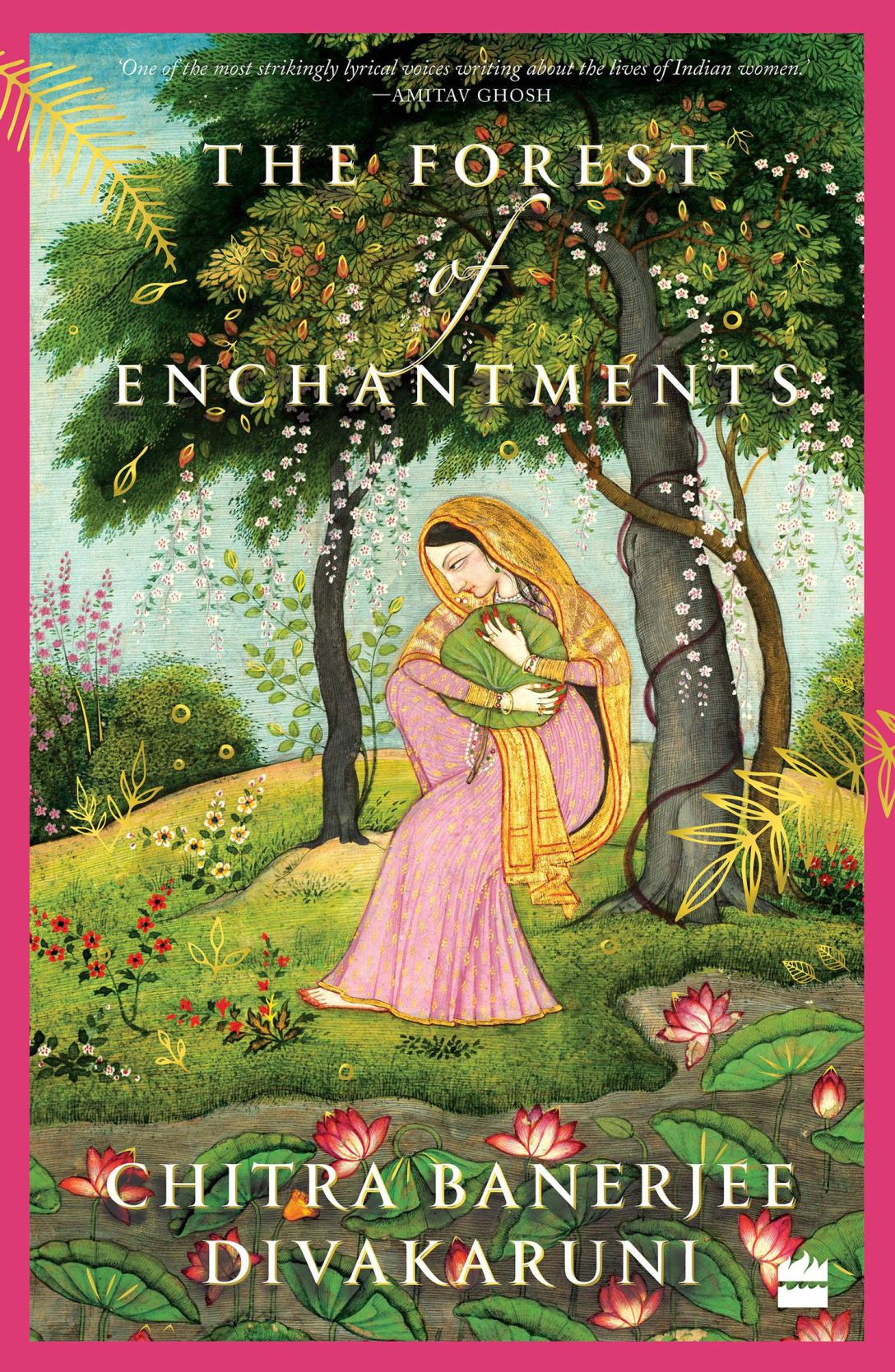
The Forest of Enchantments | Chitra Banerjee Divakaruni

The Forest of Enchantments
by Chitra Banerjee Divakaruni,
Published by HarperCollins India (2019)
Rating: ***** 

I’ve had a soft corner for Divakaruni’s writing since I first came across her work, and the projects she undertook – retellings of Indian mythology. It was this premise that got me hooked almost immediately. Coupled with her simplistic writing and excellent narration, it sowed the seeds for criticism I had of Amish’s later works. Retellings of Indian mythology often suffer from an attempt to try to force new elements of plot onto the reader, or to surprise the reader with information that wouldn’t ordinarily fit into the original tale. Divakaruni does surprise you, but her surprises feel organic, and they align comfortably with characters goals, ambitions, and weaknesses from the original epics – making her retellings believable and more human.

The Forest of Enchantments is no exception. It marketed itself as a retelling of the Ramayana from Sita’s perspective, but the book evolved into so much more as the plot progressed. I believe the book is an exploration of the Ramayana that gives the characters a human voice. The plot is the same as Valmiki’s Ramayana, barring a few surprises when Sita is in captivity. The perspective that Divakaruni offers, however, is one that makes the story a lot more enjoyable. You realize quickly that it is the women of the Ramayana who are ignored throughout the story, and the men who drive the tale with their decision-making and their alpha nature.

Divakaruni plays this to her advantage. It allows her to show the male characters in clear shades of black or white, with decision-making and emotional responses akin to the original epic. However, it gives her the freedom to build on the female characters. Sita, Mandodari, Kaikeyi and Surpanakha. We get to see the shades of grey, the emotional responses that make us, humans, who we are. As Sita is enamored by Ram, so are we, but as Sita agonizes and is frustrated by his decision-making, we are too. We are afflicted by the pangs of desire that Sita’s heart feel. Divakaruni shows us that at the heart of the Ramayana was a love story that forced a constant choice between duty and love.

The most poignant moments come at the end of the book. For me, the conclusion of the book makes it a must-read. The injustice Sita feels has been done to her comes to its fore, and you can relate to the range of emotions she experiences. That’s why this book is beautiful. As compared to the stoic tale the Ramayana is, there’s colour here. The rage of red, and the ache of blue: they’re all portrayed perfectly. I was left pondering how far we go for love, and what love actually deserves.

Some additional comments are reserved for the beautiful cover of the book, and the incredible typesetting. I haven’t been this enamored by a hardcover for a while now, and it will take quite the book to top this one – in terms of look and feel. This is a highlight of my year, and will prompt more reading into Indian mythology, I’m sure.

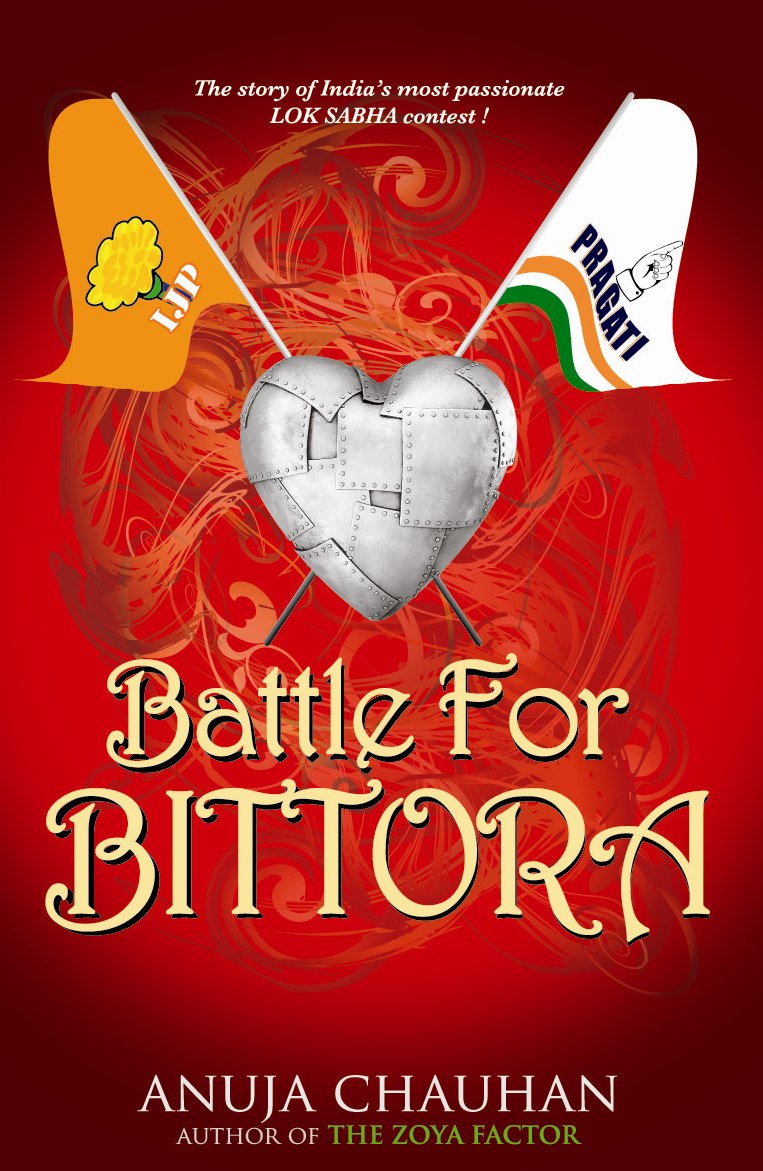
Battle for Bittora | Anuja Chauhan

Battle for Bittora,
by Anuja Chauhan,
Rating: **** 

This year, I’ve sought to read books I would not ordinarily have read. Largely, this is an attempt to broaden my horizons in terms of the material that I give time to. The Indian authors I read during my teenage years always felt Chetan Bhagat inspired. After I read my first Chetan Bhagat novel, I was certain that his books were written for the big screen. This was a notion that was confirmed really quickly – with movies inspired by his novels becoming box-office blockbusters.

Reading Anuja Chauhan made me feel the same thing. That her book is destined for the big screen. To categorize her with Chetan Bhagat, however, would be misleading. Her brand of humour is unique and far more witty than Bhagat’s, and her characters do not have a comparable level of pretense.

At the book’s center is 25 year old Jinni (Sarojini) who lives and works in Mumbai is perfectly happy with her carefree and happy existence. This is till her grandmother, a veteran politician herself, informs Jinni to drop everything and contest from their hometown Bittora. As a result of this bullying, Jinni’s life turns upside down, moving from Mumbai to campaigning as the Pragati party MP Candidate in Bittora. The book takes us through her campaign trail, as she slowly understands the nuances of politics – right from how her friends become her enemies, to how her campaign is actually funded.

The book gets more fun when her main rival is introduced: a childhood friend Zain Altaf Khan. An ex-Royal of Bittora, Zain is a candidate of IJP, a largely pro-Hindu, extreme party, which by fielding a Muslim candidate is trying to signal a change of its party ideologies. As is predictable, the love story which develops between these two protagonists is what drives the book, around the political drama which transpires as well.

As a light-hearted read, the book is phenomenal. There’s a tinge of political commentary, but that’s not the main feature here. Chauhan is liberal with her use of Hinglish, making the book extremely relatable. The slang is hilarious, with words like “Saakshaat fart” to describe people, and “kitaanu animator” to describe Jinni’s job profile. The jokes are terrible and will inspire a laugh riot, with characters like “our Pappu” being developed purely through jokes. And of course, as with every Indian family, there’s an aunty who tries to get in the way of things – which just adds to the masala.

I’d recommend this book to everybody. I gave it 4-stars because I thought it got a little dry in parts, in terms of the writing. But it’s worth the read, especially if you need some laughter therapy.

The Red-Haired Woman | Orhan Pamuk

The Red-Haired Woman,
by Orhan Pamuk,
Published by Knopf (2017)
Rating: ****

I had a hard time getting into this book. But when I did, I found that I enjoyed it more than I’ve enjoyed reading other novels Pamuk has written. The book’s appeal probably also lies in the fact that it is one of his shorter works.

The story falls into three parts, each of which is quite distinct.

The first part is both the simplest and the easiest to like. The narrator Cem tells of a job he took after his father, who was involved in a left wing group, had disappeared and before his university entrance exams. This involved working as an apprentice to a traditional well-digger. The story describes the process of well-digging and Cem’s relationship with his master, a father figure who tells him stories. Cem becomes obsessed with the red-haired woman of the title, and eventually discovers that she works in a travelling theatre with her husband. This part comes to a dramatic conclusion.

In the second part ,the older narrator continues the story and describes his progression, first in marrying, then by running a company that invests in developing new suburbs of Istanbul, one of which is the town in which the first part is set. The company becomes very successful, Cem discovers that his master survived and succeeded in finding water and completing the well, and that the red-haired woman was a former lover of his father, and the son of the red-haired woman claims that Cem is his father. This story also builds to a dramatic confrontation in which Cem is led by a man claiming to be his son’s friend to see the well, eventually revealing himself as the son, leading to a fight in which Cem’s gun is fired. So if the first part paralleled Oedipus, this is closer to Rostam and Sohrab.

The third part is related by the red-haired woman, which made for an interesting change of perspective. The son is in prison accused of Cem’s murder, and she visits him and tells him her story and Cem’s. She encourages him to write his father’s story, which explains how the first two parts came to be written.

This is a book meant for an introduction into the world of Orhan Pamuk. It is reflective of everything associated with his writing: a depth of plot, complex characters, intriguing perspectives, and so much more. It’s also reflective of my biggest criticism of Pamuk – that he tries to do too much. There are parts here which feel forced, and unnecessary, as with several other works of his. As a result, it’s a perfect introduction, and good material to assess whether or not you’ll enjoy reading Orhan Pamuk.

Silent House | Orhan Pamuk

Silent House,
by Orhan Pamuk, translated by Robert Finn
Published by Knopf (2012)
Rating: ****

Perhaps one of Pamuk’s most politically-charged works, Silent House is a really, really good read. The novel takes place against the backdrop of the military coup of 1980, and provides an opportunity to understand the relationship between Turkey’s political and military establishment through the experience of the common-man.

The plot is this. The Darvinoglu family gathers for its annual reunion at the crumbling ancestral mansion in the resort town of Cennethisar, near Istanbul. Into the mix of clashing personalities, gossip, plans and barely buried grudges that are usually part of such reunions, this book adds debates over religion, Turkey’s divided feelings about belonging to Europe or the Middle East, and hints of the looming coup. The national schism is dramatically personified in Hasan, the illegitimate teenage grandson of the family patriarch, Selahattin. Frustrated by his poverty and flunking out of school, Hasan tries to curry favour with an ultra-nationalist vigilante group, while at the same time stalking Nilgün, the beautiful, cheerful, communist-leaning granddaughter.

The book explores Turkey like none of Pamuk’s other works do – by providing insight into how families operate in such a confusing atmosphere. It provides explanations to thought patterns of the right-wing and the extremists, as well as to the understanding of Turkish culture that the centrists and the left-wing holds.

What is particularly enjoyable is the writing style, with each of the characters in the Darvinoglu family getting their own first-person perspective, which allows you to shift between the experiences of each of them individually, and the family as a collective.

This is a good book. There’s no more commentary I would like to offer. It is insightful, engaging, and fast – and worth reading.

The Museum of Innocence | Orhan Pamuk

The Museum of Innocence,
by Orhan Pamuk, translated by Maureen Freely
Published by Knopf (2009)
Rating: *** 

This is a love story about an engaged man who has an affair with a girl he meets. Over the course of the novel, he deals with detachment from the affair – since his lover flees, reconnecting with his lover, and then detachment once more, as they get separated forever. It’s a really simple plot, woven together with an intensity of prose that only Pamuk is capable of. As I set the book down, it felt like I had finished reading the diary of one of my closest friends. This is the overwhelming nature of Pamuk’s writing. He makes you feel like you’ve just understood everything about another person – his protagonist.

It’s setting is very different from his other books. Several of Pamuk’s previous attempts concentrate on understanding and depicting Turkey by providing the perspective of an outsider, or rather, an individual navigating through its various faces. Here, Pamuk sticks to representing the Turkish experience through upper-class Istanbul in the 1970s and 1980s – an image that he has previously not written much about. There is no religious element, no identity conflict that Turkey experiences in this book, making this the least Pamuk-esque book (if you want to pigeon-hole authors) that he has written.

As a result, it is a phenomenal opportunity to appreciate his craft and his ability to weave a story together. Much like The White Castle, there is a power to the narrator, which continues through to the end of the novel. Additionally, the unexpected twists – and the uncertainty of all relationships built in the book, makes this an enjoyable read.

However, I thought that the book was far too long for the plot it was explaining. While the length of texts usually never bothers me, it was really startling how stretched out the book ended up becoming. Conversation got very dry in the middle, as a result of Pamuk’s deliberate choice to spend time on each individual moment his narrator experiences. As a consequence, I lost interest in the characters at various moments of time.

Additionally, the romantic plot got creepy in various parts, with an obsessiveness that wasn’t enjoyable. It’s very possible that the translation leads to this heightened creepiness, but if the book is this creepy in the original Turkish, it is a cause for concern.

In conclusion, I’d recommend reading it if you are a literature enthusiast. This isn’t a light read, even though the plot summary makes it sound like it.

My Name Is Red | Orhan Pamuk

My Name is Red,
by Orhan Pamuk, translated by Erdağ M. Göknar
Published by Vintage (2002)
Rating: ***** 

I’m not sure I will be able to do justice to the plot of My Name Is Red. It’s difficult to put into words. In essence, it is a murder mystery. An individual, Elegant has been murdered, and his corpse lies undiscovered at the bottom of a well. Speaking from the afterlife, he hopes that his body is found soon and that the murderer is captured.

However, Elegant is not the sole narrator through the book. Each fresh chapter introduces a new character to the story, and ends up explaining their backstory, alongwith how much they know about the murder of Elegant. As we learn more about the motives for murder, so we learn about the motives behind art, and the possibilities of its interpretation.

Pamuk’s consistency with exploring the blurring of lines in the confluence between the East and the West continues here as well. Each narrator, though modernist, has an intriguing take on the value and role of art in a person’s life. So too, does each narrator have a perspective on whom the likely murderer is. Pamuk unravels the plot slowly, allowing for these philosophical discussions and beliefs to be exposed in as nuanced a manner as possible. Pamuk manages to portray the 16th century world, full of its own contradictions, and capture it in a manner that is wholesome and enjoyable.

However, if you are reading Pamuk purely for the murder mystery – this might not live up to your expectations. There’s barely any distinction drawn in the likelihood that one of the narrators may have murdered elegant, which leaves room for a lot of doubt, and a lot of tension, one that Pamuk diffuses in a manner that isn’t all that appreciable. The narratives is skewed and feels heavily-strung together.

As a result, Pamuk’s novel gets 5-stars on its value as a text and its contribution to my understanding of ideas that it presents – lucid, simplistic, and detailed. However, as a pure literary text, my jury will have to wait for a re-read. Or multiple re-reads.