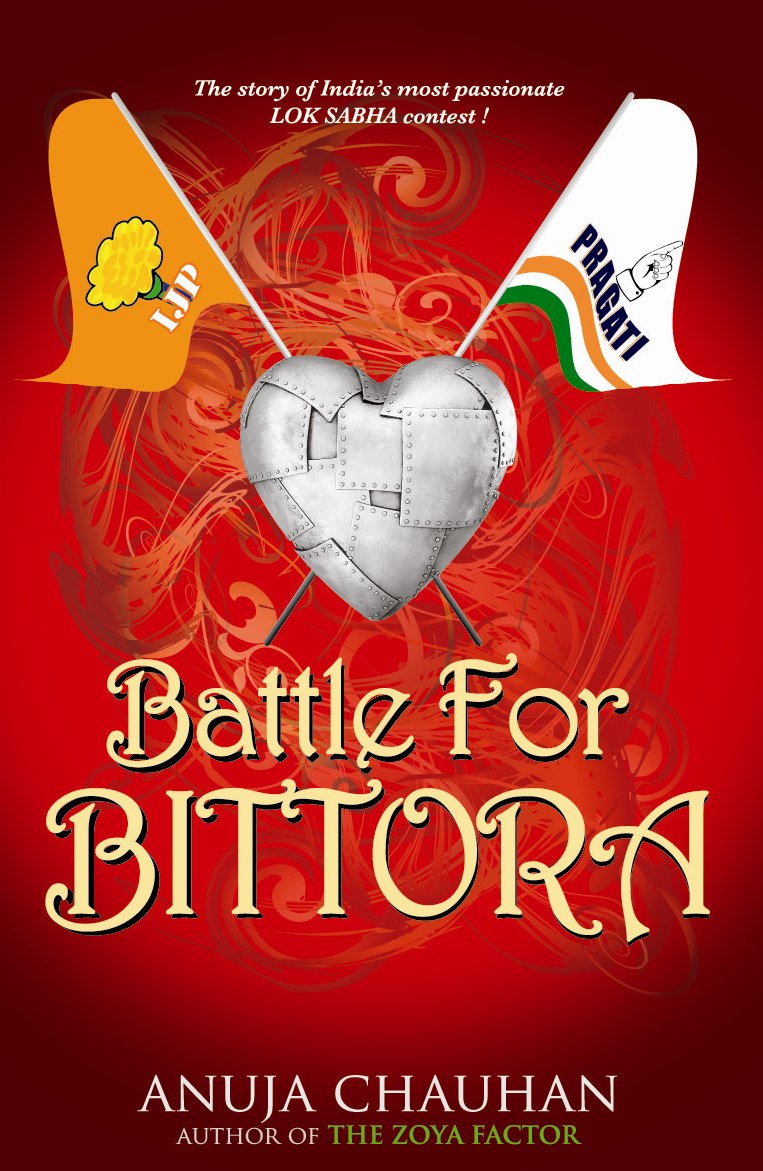
Battle for Bittora | Anuja Chauhan

Battle for Bittora,
by Anuja Chauhan,
Rating: **** 

This year, I’ve sought to read books I would not ordinarily have read. Largely, this is an attempt to broaden my horizons in terms of the material that I give time to. The Indian authors I read during my teenage years always felt Chetan Bhagat inspired. After I read my first Chetan Bhagat novel, I was certain that his books were written for the big screen. This was a notion that was confirmed really quickly – with movies inspired by his novels becoming box-office blockbusters.

Reading Anuja Chauhan made me feel the same thing. That her book is destined for the big screen. To categorize her with Chetan Bhagat, however, would be misleading. Her brand of humour is unique and far more witty than Bhagat’s, and her characters do not have a comparable level of pretense.

At the book’s center is 25 year old Jinni (Sarojini) who lives and works in Mumbai is perfectly happy with her carefree and happy existence. This is till her grandmother, a veteran politician herself, informs Jinni to drop everything and contest from their hometown Bittora. As a result of this bullying, Jinni’s life turns upside down, moving from Mumbai to campaigning as the Pragati party MP Candidate in Bittora. The book takes us through her campaign trail, as she slowly understands the nuances of politics – right from how her friends become her enemies, to how her campaign is actually funded.

The book gets more fun when her main rival is introduced: a childhood friend Zain Altaf Khan. An ex-Royal of Bittora, Zain is a candidate of IJP, a largely pro-Hindu, extreme party, which by fielding a Muslim candidate is trying to signal a change of its party ideologies. As is predictable, the love story which develops between these two protagonists is what drives the book, around the political drama which transpires as well.

As a light-hearted read, the book is phenomenal. There’s a tinge of political commentary, but that’s not the main feature here. Chauhan is liberal with her use of Hinglish, making the book extremely relatable. The slang is hilarious, with words like “Saakshaat fart” to describe people, and “kitaanu animator” to describe Jinni’s job profile. The jokes are terrible and will inspire a laugh riot, with characters like “our Pappu” being developed purely through jokes. And of course, as with every Indian family, there’s an aunty who tries to get in the way of things – which just adds to the masala.

I’d recommend this book to everybody. I gave it 4-stars because I thought it got a little dry in parts, in terms of the writing. But it’s worth the read, especially if you need some laughter therapy.

My Name Is Red | Orhan Pamuk

My Name is Red,
by Orhan Pamuk, translated by Erdağ M. Göknar
Published by Vintage (2002)
Rating: ***** 

I’m not sure I will be able to do justice to the plot of My Name Is Red. It’s difficult to put into words. In essence, it is a murder mystery. An individual, Elegant has been murdered, and his corpse lies undiscovered at the bottom of a well. Speaking from the afterlife, he hopes that his body is found soon and that the murderer is captured.

However, Elegant is not the sole narrator through the book. Each fresh chapter introduces a new character to the story, and ends up explaining their backstory, alongwith how much they know about the murder of Elegant. As we learn more about the motives for murder, so we learn about the motives behind art, and the possibilities of its interpretation.

Pamuk’s consistency with exploring the blurring of lines in the confluence between the East and the West continues here as well. Each narrator, though modernist, has an intriguing take on the value and role of art in a person’s life. So too, does each narrator have a perspective on whom the likely murderer is. Pamuk unravels the plot slowly, allowing for these philosophical discussions and beliefs to be exposed in as nuanced a manner as possible. Pamuk manages to portray the 16th century world, full of its own contradictions, and capture it in a manner that is wholesome and enjoyable.

However, if you are reading Pamuk purely for the murder mystery – this might not live up to your expectations. There’s barely any distinction drawn in the likelihood that one of the narrators may have murdered elegant, which leaves room for a lot of doubt, and a lot of tension, one that Pamuk diffuses in a manner that isn’t all that appreciable. The narratives is skewed and feels heavily-strung together.

As a result, Pamuk’s novel gets 5-stars on its value as a text and its contribution to my understanding of ideas that it presents – lucid, simplistic, and detailed. However, as a pure literary text, my jury will have to wait for a re-read. Or multiple re-reads.

Snow | Orhan Pamuk

Snow,
by Orhan Pamuk, translated by Maureen Freely
Published by Vintage International (2005)
Rating: **** 

Snow is essential reading.

In two distinct parts, the book follows the story of Ka (the shortened form of Kar, which is “Snow” in Turkish).

The first part follows Ka’s discovery of Islam. It begins as Ka reunites with Ipek (a woman he once loved), who has recently divorced Muhtar, owing to his interest in political Islam. Ka meets Muhtar, and is introduced to Muhtar’s experience with Islam. During that meeting, he is accused, alongwith Muhtar, for a recent public shooting for which an Islamic extremist group claimed responsibility.

Ka begins to write, composing a poem, “Snow”, and several other poems. Ipek urges Ka to visit a Sheikh, and they have an astounding conversation on the value of organized religion in an individual’s life. Ka, although hesitant to accept religion – claiming it to be “backward”, chooses to accept instead, that his poetry is a gift from God – an unnamed entity. Following this interaction, Ka continues to meet people with different experiences of Islam. He meets a self-identifying Muslim radical as well as Islamic feminists.

Reflective of a newly independent Turkey, there are growing tensions between secularists and Islamists, which ends up blowing out of proportion at a televised event. The police and military impose martial law, and Ka is taking in for questioning once more. Upon his release, he meets an actor who identifies as a Turkist Republican, who ends up orchestrating – in a spectacular sequence, both a coup d’état and a coup de théâtre.

The second part deals with a denouncing of the coup. True to Pamuk, there is a post-modernism in his introduction as the narrator of the book. We fast-forward four years, and explore Turkey post-Ka’s life, and reconstruct events leading to his demise.

You’ll notice that my plot summary elaborates one part of the book far more than it does the second. This is intentional. If you’re intrigued by what the first part holds, the second part is a deeper dive into all things so related, and I would recommend reading the book to find out more.

The characters are phenomenally crafted. My usual criticism of Pamuk involves a comment on how characters are just one-dimensional individuals. But here, every single character is developed well, with backstories that keep you hooked, and motives that you find yourself questioning at every turn. There is no black-and-white, only grey, and it’s very easy to fall in love with, and hate Ka and his crew.

A truth that has been fundamental to Turkey has been its struggle with who it wishes to be, who its leaders wish to represent, and how to unite a population that has such fundamentally different beliefs. Pamuk’s reflections on this struggle is a driving force behind Snow’s plot, and is an exposition both in Turkish society, and a commentary on the ability of speech – to propagate messages of peace and unity, as well as violence.

One star is docked again for Pamuk’s staunch refusal to allow us to fully immerse ourselves in the world of his characters. Similar to the New Life, he reveals nothing of Ka’s poems – making it difficult to fully relate to Ka’s perception of the world, and more crucially, fully appreciate certain scenes that Orhan the narrator weaves for us.

However, an understanding of Western Asia would mandate a reading of Snow. And I would force it upon people as well.

The New Life | Orhan Pamuk

The New Life,
by Orhan Pamuk, translated by Guneli Gun
Published by Faber and Faber (1997)
Rating: ***

Reading Orhan Pamuk is an exercise in learning and unlearning. This book was the third in my journey of understanding the author.

The New Life follows the journey of individuals who, captivated by a book they read, seek to implement its principles, and achieve its conclusion – the prospect of a new life. The protagonist, Osman, notices the book as his friend, Janan sets it down – buying his own copy shortly thereafter. Subsequently, Janan introduces Osman to her boyfriend, Mehmet – who is shortly gunned down at a bus stop. As Mehmet is untraceable, Janan and Osman end up taking bus journeys – which are violent, and surreal, in an attempt to find Mehmet. Ultimately, they find Mehmet’s father, Dr. Fine, who – as the antagonist in the story, has attempted to curb the readership of the book, by murdering individuals who follow its teachings using a network of spies. The book concludes with a revelation of the book’s actual author – who is related to Osman.

This is a summary of the plot. The nuance involved, along with Pamuk’s writing style, makes this an extremely heavy, complex read. As a result, unlike his other works, I don’t think this is his most accessible novel. It left me feeling several mixed feelings. Before we get to criticisms however, Pamuk deserves appreciation.

As always, his storytelling will leave you with a sense of wonder and bewilderment. There’s a lot of depth, and while sometimes difficult to follow, Pamuk’s imagination is a credit to mankind’s thinking. Technically, Pamuk achieves Inception-level writing in the 90’s – something that only took to the screens much later.  Again, quintessentially true to style, there are scathing observations on Turkey’s complex, confused character, and remarks on the West. Further, the existentialism Osman faces – which leaves him in quest for a New Life, and his eventual succumbing to that quest, is something that is relatable across generations.

While the ideas and layering is grand, the writing here lacks a lot of precision. The prose here is heavy. Descriptions, for example, are over-done. Sentences are lengthy, and complicated. As a result, Osman’s introspection is overly complicated, rather than simplistically presented. Additionally, Pamuk appears to have a thing for disappearing acts. Reading this after The Black Book made them seem far too similar, and expectations were heightened.

Further, Pamuk doesn’t develop his characters as much as he usually does. There’s too much similarity between Osman and Janan. Their chemistry is far too quickly created, and progresses only as a result of their commonalities. Their friendship, and unrequited romance, is not organic, insofar as their personalities do not show any progression – aside from their sole focus being to find Mehmet.

Finally, I think what the book could have done with, is some exposition of the book that Osman, Janan and Mehmet all read. I understand that the crowd is split on this, but Pamuk tries to leave it to the reader to figure out what the book was about, and what the “new life” the book propagated actually is. In a sense, this is fantastic – it’s so subjective, and open to interpretation, that it allows the reader to soak in all this information and formulate an opinion. On the other hand, the motivation of these characters is so grey, and difficult to  pinpoint. Some excerpts – perhaps two lines, even, at the start of chapters, would have been fantastic.

In short, this is a more of a case of “what could have been” rather than “what is”. If you’re intrigued by Pamuk, it’s worth the shot, but shouldn’t be your first pick.

Sadie | Courtney Summers

Sadie
by Courtney Summers
Published by Wednesday Books (2018)
Rating: **** 

This is an atypical read for me largely because it isn’t a book that I would buy off of shelves if I merely read the blurb. The reason I chose to read this book is that one of my friends absolutely loved it, and recommended that I give it a try, which is never something I’m averse to. This is a fast-read, but there’s a couple of warnings I’d like to put at the start of my review, so you can stop reading in case you get triggered. The book isn’t happy in any sense. It is not a book that builds up to a happy ending, and there is no moment where I caught myself smiling while reading it. It’s an incredibly serious read. It discusses several themes that are difficult to speak about in society. Rather, it highlights experiences that contain social stigma attached to them, and lead to victim-shaming culture. My trigger warnings include: murder, suicide, child prostitution, paedophilia, sexual abuse, and drug abuse.

With that being said, let’s examine the text.

Sadie follows the story of one dead girl, one missing girl, and a quest for revenge. Nineteen-year-old Sadie is determined to find who she believes to be her younger sister Maddie’s killer. With few clues to go on, she decides to embark on a journey to find him and make him pay for what he did. This is what the overarching plot is.

It seems pretty straightforward, and perhaps a story that could simply be described as a mystery – with Sadie acting as detective. But Summers manages to achieve a lot more with her writing. The novel is told in two distinct time-periods, and distinct points of view, which help with how the plot is built. The first is Sadie’s point of view, told in the past tense, with her tracking down her sister’s killer – a man who knows how to disappear better than most. The second is West McCray’s true crime radio show transcript called The Girls, where he attempts to find Sadie by following the little information the police offer him. These are very, very unique points of view, which help draw a very human connection to everything that transpires – something that stuck with me at the end of the book. Society reports events like these very narrative-like and with a victim-blaming angle to most of the reportage around it. By choosing to give the “victim” here a voice, and providing the voice of somebody trying to find her, desperately, Summers is able to portray nuances in emotion, and engage the reader in a way that makes you question every character’s motive and motivation. This sense of anticipation and suspense is really heightened in the last 20 pages, which I think could have been published separately – they’re the most logical (albeit dreadful) conclusion to a story of this kind.

The conclusion of the book is worth the read because of how realistic it is. It’s the only thing that makes sense in a world like ours. And you’ll hate yourself for knowing how Sadie’s story ends, but Summers’ manages to draw you in, page after page.

What I’m most impressed by is Summers’ ability to write a podcast transcript. I like true crime podcasts and shows as much as anybody – and most media houses seem to thrive on the market. Very few are any good. Writing a podcast transcript is an art that this author really nails down. The idea of a podcast like narrative really set the tone for West McCray’s voice. I often found myself reading the narrative the way I’d narrate a true crime podcast – which added a new layer of engagement to the reading experience. McCray is an underappreciated character on Goodreads – and I would’ve appreciated a bit more about him in the book. I also docked a star because in places, Summers’ writing style can lead to a frustratingly slow pace and a lot of artificially manufactured tension.

Overall, I think it’s worth reading because it forces you to think about society. It’s also a book that’ll make you pray that we become better as a world – because it seems ridiculous that we’ve got so much nonsense going down. The book is raw, which means that it forces you to accept the truth – no matter how uncomfortable that may make you feel.

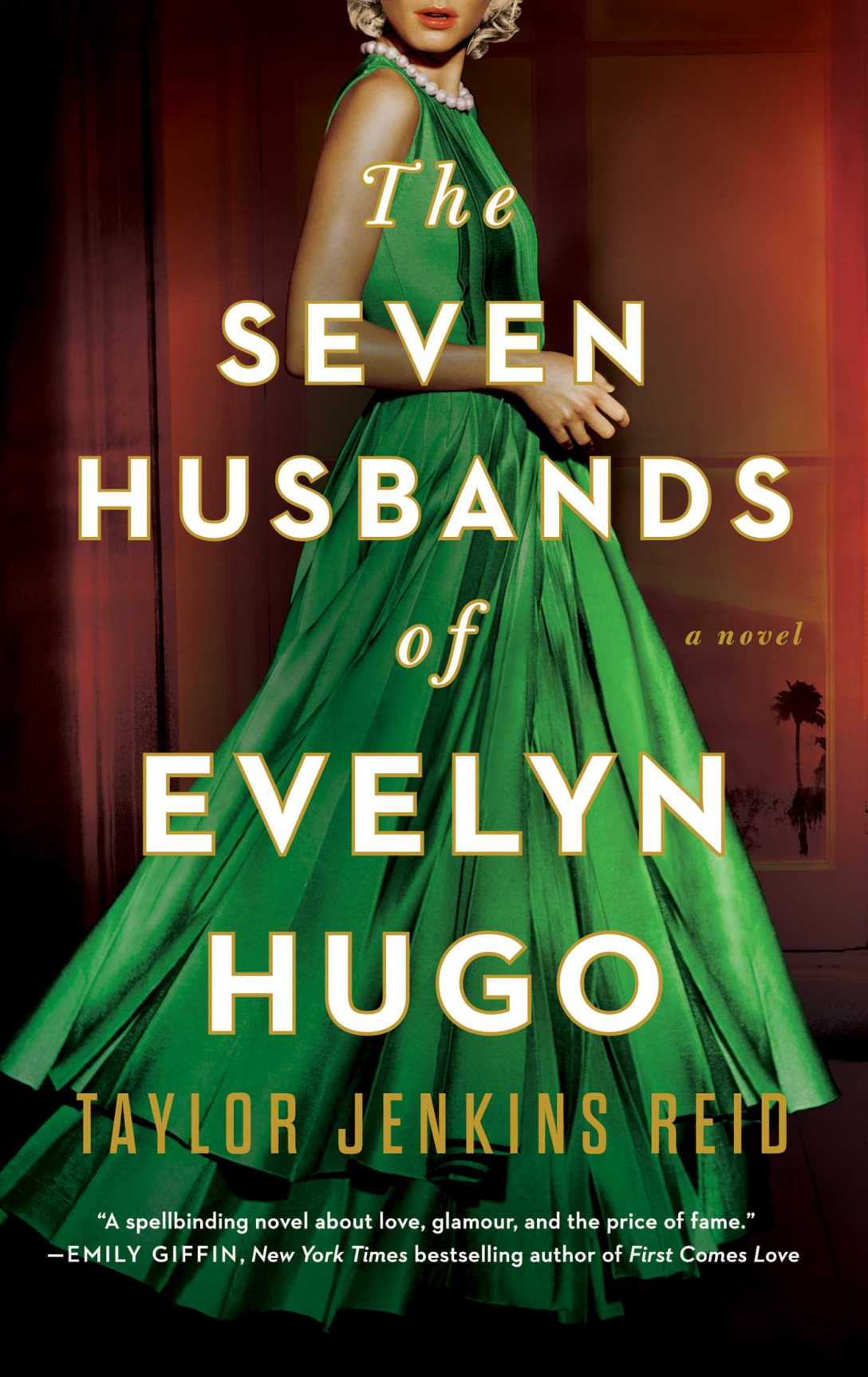
The Seven Husbands of Evelyn Hugo | Taylor Jenkins Reid

The Seven Husbands of Evelyn Hugo
by Taylor Jenkins Reid
Published by Atria Books (2017)
Rating: ***** 

This is a fast book. This does not mean it’s a short read – the page count is 388 (hardcopy) and 304 (softcopy). It’s just an incredibly fast-paced book. Before reading the book, I saw a friend get consumed in it, and she described the writing as “incredibly engaging”, amongst other adjectives. 300-odd pages later, I do not disagree one bit. This is, far and away, one of the best pieces of fiction writing I have read.

The plot, at first glance, doesn’t spark any emotional reaction. It’s about an ageing former starlet, Evelyn Hugo, who, after years of being reticent with the media, decides to grant Vivant magazine an interview – specifically in the context of some dresses she’s auctioning off for charity. Her only condition is that Monique Grant, a relative unknown, is the reporter who interviews her. A few pages later, and Hugo reveals her ulterior motive in inviting Grant to her home – to give Grant the exclusive tell-all and the rights to publish an authorized biography once Hugo dies. What transpires is this narration of Hugo’s life, leading up to the present day. That, however, is barely scratching the surface of it. Through the recount, we explore all the romantic relationships Hugo has had, the headlines she dominated during her heydey, and, in bursts, Monique’s present-day life. Throughout, there’s a sense of foreshadowing that the two women are connected somehow, a reveal which marks a fitting conclusion to the book.

I’m going to review this systematically since a lot of it is very, very fresh in my memory at the moment.

First, the characters. Since a large part of the narration happens in a setting that is the late 60’s/70’s, it’s pretty amazing that Reid weaves in such large amounts of representation into the book, in terms of the communities across the sexuality spectrum that she is able to describe. What’s also phenomenal is the way she introduces and describes her characters. Every character is relevant, and Hugo, the protagonist, manages to have meaningful interactions with each of them – which plays a huge role in plot development, but also in terms of your understanding of context. Moreover, the characters are not one-dimensional. It’s very difficult to use one adjective to describe them, for example. Each character is layered, and their contribution to Hugo’s life is well-explained, in terms of how they affect her thinking, and what her emotions are.

A special paragraph is needed to talk about the two protagonists, if you will. Evelyn and Monique, the two characters whose interactions shape the entire plot are really different from each other. There is a gap both in economic stature and in confidence – a distinction Reid draws within the first 50 pages itself. It is this distinction that enables both ladies to learn from each other. While Evelyn takes on more of a mentor role, it becomes clear that at latter parts of the book, especially towards its conclusion – there are things that she’s picked up from how Monique has responded to the tell-all. Monique’s growth through the story is phenomenal. If Evelyn is the one who is being reflective and assessing her life, Monique learns how to change her life – in terms of being able to put herself and her emotions before others. That emotional growth and maturity is well-traced, and not knee-jerk. Reid’s exposition of Monique’s life is measured and does not feel out of place – which deserves special praise.

Second, the treatment of sexuality, and representation.  I’ve already spoken about how diverse the characters are. What demands more attention, however, is how well she’s able to treat sexuality in the context she sets out. There are several things about an individual’s identity and sexuality that are incredibly confusing to people today – in terms of people exploring their sexualities, or identifying a particular way. It sparks off a lot of conversation – and this is despite our generation being lucky enough to have a lot of information and lesser prejudice than earlier. Reid is able to trace what it would have been like in the late 1900’s, and she’s able to do this in two parts.

The first, is pre-Stonewall, where the story charts the sexuality of several characters and their attempts to keep it secret and conform to the heteronormative expectation that society has for them. There’s also a specific discussion in this time period about bisexuality and it’s misunderstanding – something that stood out in this book. Without spoiling too much, it’s interesting to see that members of the homosexual community themselves didn’t fully understand what being bisexual meant. This is well documented today, but the fact that Reid chooses to give a voice to a bisexual character, engage with the social conflicts the character faces is worth a lot of praise. The second time period the book engages with sexuality in is post-Stonewall, which is a little more liberal, but involves conversations that lead to definitive decisions about coming out.

Finally, Reid deserves congratulations for her construction of family and friendship. If anything, there is a lot of pain in this book. There’s a lot of love, a lot of loss, a bunch of conflict around identity, and a lot of tabloid gossip. Through the recount, Hugo builds up what her friendships did to her, and then descends into a tale of her family. Her relationship with her daughter is so profound and the reactions so natural that you’re on edge to find out how the daughter will grow up. Her narration of “family” breaks away from a lot of traditional notions, and her detailing of the platonic/romantic divide in Hugo’s life leaves you wondering how much of romance today is a socially constructed expectation. Atleast, I was. It makes you ponder about how romantic relationships are treated in society as automatically being a step-up from a platonic one, and how untrue that premise is in reality. There’s one quote about intimacy that particularly stands out to me – in terms of how, more than anything, it’s the ability to be true with someone.

What is touching is her development of Monique’s arc and Monique’s family, and I think the relationship of mother and daughter there is another highlight. Monique’s mother is inserted into the book in just the right places, something I absolutely adored.

I would only dock points for the fact that the book is not slightly longer, for I think the ending (the last 30 pages) were extremely rushed. There is a certain power to the voices, the characters, and the description that Reid is able to weave, one that will linger in my memory for a while. All in all, a fantastic read, well worth the time and investment.

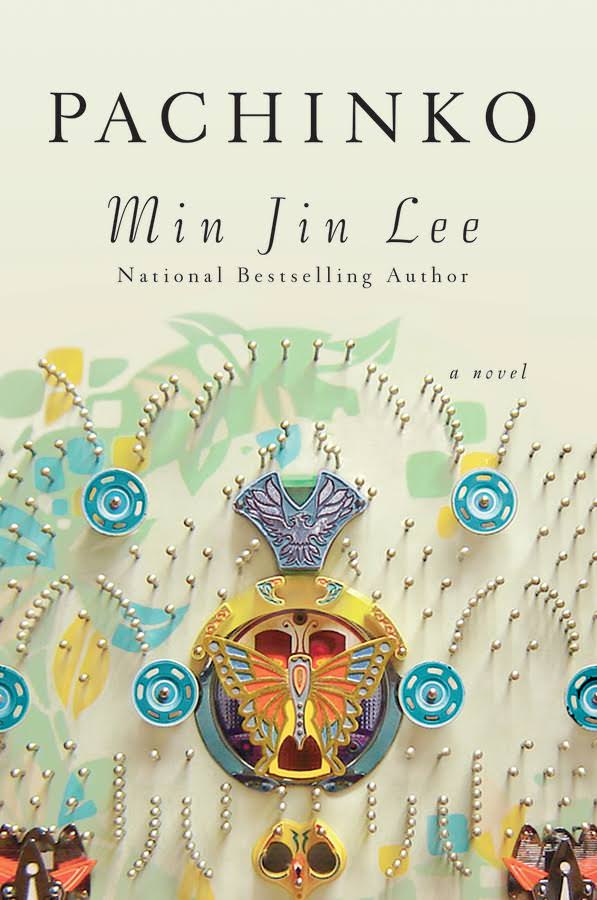
Pachinko|Min Jin Lee

Pachinko,
by Min Jin Lee
Published by Grand Central Publishing (2017)

Min Jin Lee’s novel traces a single Korean family through multiple generations across the 1900’s. Without an individual protagonist or a singular plot, the novel is filled with characters, who navigate periods of immense sorrow and joy in annexed Korea, and subsequently, in Japan an adopted homeland that refuses to accept them. The book tests your understanding of several themes, including faith and family.

The thrust of the novel comes from a perplexing loss of identity – a natural consequence of being colonized. Being tagged as Korean under a Japanese Empire means very little, and being a woman under such an Empire brings with it, it’s own set of limitations and societal obligations.

The first chapter is perhaps the best insight into what the novel is going to become. Characters are introduced rapidly, with physical description and dialogue providing the most insight into their behaviour, and the plot moves incredibly smoothly. Sunja is introduced as Hoonie’s daughter – her own identity only beginning to develop once her father passes away, and thus begins a moving saga of a largely ignored historical arc.

Sunja’s unplanned pregnancy sees her combatting her understanding of love, and what relationships mean, at a very young age. At the verge of bringing shame upon her family, already within the lower echelons of society as a consequence of being Korean, she is rescued by a Minister, who offers to marry her. It is at this point that Sunja moves from being Hoonie’s daughter, to becoming a subsequently, a mother, and subsequently Baek Isak’s wife.

As religion is explored through Baek’s understanding of God and what Christianity means, death begins to appear as a recurring occurrence, with Korean families scrambling to stay alive, and getting drafted to serve the Emperor, only to lose their lives on the battlefield. Internally, societal conflict results in death as a result of expressing yourself. Under an Emperor, having an opinion is absurd and a social evil, and you realize, through Yoseb, that suppressed emotions lead to slow, decaying madness.

Shame and guilt underpin many of the finest scenes in the novel, with every character continually forced by their position as second-class citizens to make painful sacrifices, and, consequently, to consider the nature of those sacrifices, and whether they’re worth being made. This continues down to Noa, who leaves his family to start afresh, and Solomon, who is forced to break off a relationship on the same day he is fired.

At all points, however, Pachinko is what appears to tie each character’s narrative together. As a mechanical gambling game that originates in Japan, the Koreans find refuge in running parlours for the rich Japanese, earning their livelihoods from the same business. Noa’s character is the only Korean to reach University, but he gives up on his education, and finds himself running books in a Pachinko parlour, the same thing his uneducated half-brother does, and Pachinko seems to be the ceiling at which Koreans reach.

The novel exemplifies historical research. Lee’s language crafts 20th-century Korea and the sights and smells of the shabby Korean township of Ikaino in Osaka as if you walked down the streets yourself. As a multi-generational novel, age gaps and cultural shifts are extremely well presented, and the novel gets you to think about immigrants in East Asia by presenting Oriental History without a Western skew.

All in all, my 2018 Reading has started off well. This one’s a must-read.