2020 in Review: Podcasts

It’s difficult for me to pinpoint exactly when the word podcast entered my vernacular. It’s been around in my brain for a while and in my first year I helped to edit one for a while, because I knew how to edit audio. I didn’t listen to too many before 2020. I got into them in January, and kept finding podcasts I liked, following along to a few during my first three months because I was on a real running spree, and because of things in my personal life, boy oh boy did I miss conversation. I love conversation, and I love stories – and I found that podcasts felt like both.

I know that podcasts became a trend this year. Everyone at home began to start one, and almost everybody I know has started listening to podcasts this year. I’m very wary of trends usually, because I dislike being peer pressured into anything; I like to think that most things I’m suggested by my friends, I do out of a personal desire to do or abstain from the thing. So I monitored, and this podcast thing just kept growing. Through the entire year, as webinars grew in number, the number of new podcasts I saw on Spotify, and recommended to me by friends or social media kept increasing. I was blown away.

Personally, for me, three things have happened with podcasts this year.

First, in a time where human contact was limited, and at home, I got to hear other humans very less, I was given company by podcasts. I’m aware about how lonely this makes me sound, but, it’s true. I’m not going to deny that my circumstances made me feel alone on some days. Maslow’s hierarchy of needs clearly explains that we need belonging and love. Virtually, I felt both so much. My parents showered so much love on me, my friends caught up with me and my family gave me company and support. I never felt lonely as a result, but the house felt alone on some days. What I learned early on, when the pandemic started, was that I was at ease when I heard noise. I was very comfortable working with music or shows playing in the background. These mediums don’t really speak to you though. What podcasts do is that they make you feel like you’re actually having a conversation with someone, or that you’re witnessing a conversation, in the same room as another set of human beings. It’s that physical proximity I definitely missed this year, and podcasts felt like a wonderful way to experience that – and more often than not, learn new stuff. The same was true of audiobooks, and very soon I found myself listening to these more than music (how?)

Second, podcasts made me appreciate human stories more. I’ve always been grateful for people and for this planet. Although we have science and the vocabulary to explain things, when I step back and thing about how much must take place for a human to experience life on this planet, I can’t help but feel a sense of awe. Which is part of the reason I blog. This is my life’s story. My life’s experiences on the internet. The pandemic has taken away so much. There were so many stories untold. Humans of New York introduced us to the range of human stories we ignore in our day to day lives; and the other Humans of… projects that spun off from it introduced us to more of the same. I became intrigued most by conversational podcasts, which introduced me to people and stories I wouldn’t otherwise have the chance to ever experience, or hear about. If I was someone obsessed with chronicling my life’s stories, I wonder why I didn’t stop and hear what other’s life stories were. I mean, I’m being harsh on myself, I definitely do listen to what people say and what they’re communicating, but I think about it now and I don’t think I really listened to learn. I’d always listen to respond or to react. Never just to hear about someone else’s life. As a result I think I missed out. I’m not going to get that back, but I know that podcasts have made me value human stories more, and listen more closely to the human stories in my everyday conversations and life. I’ll be searching for them. All these podcasts that came up this year made it clear to me that people had stories they wanted to share. All they needed was a platform. Blogs and podcasts, as media, are super democratic (as of now). I’m glad people feel courageous enough to share their stories. I’m grateful to be able to listen to them.

Third, I started a podcast. I jumped into the trend. My mother and I started a podcast called Tuesdays with Mummy. Out every Tuesday, the podcast is just conversation I have with her on the different subjects we’re traversing in our lives. I’m influenced by Mitch Albom and Tuesdays with Morrie. I love my parents and I’m extremely grateful for them. I also think they’re oceans of stories because they’ve lived so much longer than I have, and I want to hold on to them forever. I’m an auditory person, and I’ve heard my parents’ voices for the longest time in my life, since I’ve been born – from the lullabies they sang to me as I slept, to their rage when they yelled at me for something stupid I did, to their words of encouragement as I picked myself back up when I fell. I love their voices, and I never want to forget it. Recording auditory memories I can listen to felt like the perfect cure. The only reason I run it with my mum is because she’s free-er at the moment, but we feature my dad so much, I’m very pleased. There’s so much stuff I speak to my parents about, but there’s also so much we don’t speak about, and I’m so eager to pick their brains each week on the podcast, because I know my mum speaks to my dad about stuff too, to get ready for the podcast. I love that. People listen – which I find strange, but it’s just a reflection of how curious people are about human stories. The feedback we’ve received has been positive, but also very constructive. I’m grateful to have such an open relationship with my parents, which allows me to record this podcast and share her stories, and portions of my own in a new way.

So where’s the recalibration? It’s implicit in everything I’ve said above. Prior to 2020, I think I was willing to claim that I was okay without human contact or friendships, that I’d survive just fine, because of the hobbies my parents have made sure I’ve developed and my general interests in figuring out where I am, or living peacefully. I don’t think that’s true anymore. At minimum, I need podcasts and human stories. I wouldn’t want to live alone on a desert island forever; or anything of that sort. I genuinely love human beings and their potential and their stories. That’s what I’ve recalibrated to.

In a way, podcasts and podcasters are my friends now. They’re with me from when I wake up to when I sleep. When I walk, when I run. When I’m not meeting people, I’m usually listening to a podcast, an audiobook, or music, depending on my mood. Good headphones are a clear priority (if you’re gifting me hehe!). I’m very grateful for the company, and I’m in awe of human stories. There’s an adventure I’m going to embark on in 2021, to continue to stay curious about human beings I meet and learn from them. 2020’s set me on the way.
2020 in Review: Videogames and Friendships

In my childhood, I was never deprived of the entertainment that videogames can offer. However, given the number of hours my peers spent on videogames after school hours, my parents found two ways to combat me from doing the same. First, they purchased my a Playstation Portable really early on, as soon as it came out. Second, we only purchased games once a year, and I was allowed to buy two. Third, the PSP was hidden away from me during school-time, and I had access to it only during holidays – of any kind. Finally, I was not allowed an upgrade. So no PS2, PS3, or anything else. That kept me away from playing with my friends and playing for hours beyond what I was allotted. I was never really good with videogames that were competitive, enjoying storylines a lot more. Some time around Grade 9 I was allowed to trade-in my PSP for a PS3, but it came at a time when I couldn’t really enjoy it, so I moved on from it pretty quickly. That didn’t mean I stopped enjoying videogames. I’d still play when I went to my friends’ houses. Even when I didn’t have my PSP as a kid, I’d be able to play Runescape for a couple of hours with my friends each week, and when I visited their houses, their PS2 was fair game.

As a consequence, I think my relationship with videogames was less personal and more community-based. I also don’t think I developed a particular attachment for them; but I did follow along to all of the conversation surrounding them because of my interest in technology and the way my friends described games.

I rediscovered videogames at the end of last year. When I went back to University, I decided that it was something I’d continue to do, to switch off from anything related to making applications or doing University work. Videogames found a place on my OneNote, highlighting my commitment to being entertained by them. Then COVID-19 struck. I relocated home. For the first week, I didn’t play too much at all. I was very focused on figuring out to live alone at home, how to operate stuff, and what all the precautions advised by the Government meant for me.

At some point in the second week, I think I realized I was freer than I had ever been, and at some point, the amount of information around the pandemic meant I needed a switch-off. My school friends, who realized I was in Bengaluru now, reached out and added me to a gaming group. 2020 has been a strange year, and for a large part of it, despite having a community around me, and my parents and family a video-call away, I know I was physically quite alone. This was a deliberate decision, but there were some days where I wondered why there was so much quiet around me. Although we played every day, it was those days that made me most grateful for my school friends and videogames. My house was filled with a cacophony of sound that made me feel like I was in school again. Even when I wasn’t playing I could just watch the others play, or chat with them on our discord server while they gamed away.

So that’s the first thing that’s changed. I’ve recalibrated my view toward videogames and toward friendships I established in school.

Let’s talk about videogames first. Even though I enjoyed them, I’d rationalize how I didn’t experience them myself so much by thinking about how I was spending my time in a better way, insofar as I was always doing something I would have been doing anyway instead of playing videogames. In that position however, I wasn’t ever in a position where I could consider the value of videogames in a fair, objective way. My decision was based entirely on my limited experience and exposure to limited games, and how I emotionally felt – that it was better to be outside playing sports or such, or studying. Through the pandemic though, I changed that. My parents really couldn’t say anything because I did need a switch-off.

So, here’s a couple of things I now recognize about videogames.

Videogames improve your fine motor skills. I read several scientific papers, and it definitely appears that there’s a positive correlation between playing videogames and motor skills. They also improve your cognitive abilities in terms of being able to process novel pieces of information and adapt quickly. This, I think is particularly true of action and first-person games.

Videogames improve your communication skills, particularly where you play team games. You learn how to say things quickly – in shorthand.

Videogames allow you to experience things that you wouldn’t ordinarily get to experience. I played a lot of F1 2020, Football Manager, FIFA 2020. None of these things: being a racing driver, a football manager, or a football player are things that I see myself being able to do in real life. I do not possess the skill-set or the financial backing. I possess the passion, and the desire to learn, which I can put into effect in videogames, and derive joy out of. Flight Simulator also, for example, allows you to satisfy the aviation geek inside you. I can’t replace that.

Finally, they are fun. That’s been the biggest, biggest change in my perspective toward videogames. I still am terrible at videogames, but even when I lose, I find myself having more fun than so many other things I do with my time. Therefore, when it comes to making decisions about how to spend my time – if I’m trying to decide how to have the most fun with a block of time, there are times now where I would genuinely choose videogames, and be very comfortable with that.

I learned that I’m somebody who enjoys sports games – and arcade games, the most, followed closely by story-line based games and role-playing games. Which is why Runescape is still a favourite. First-person action and shooting games I will play for my friends. I will always be terrible at them. I don’t have the patience to spend hours improving my skill.

What I also witnessed this year that deserves conversation is how videogames became a place where fans of a particular sport were brought closer to real-life players. F1 drivers were playing F1 2020 and struggling in places, which was hilarious for us. Real-life football players started playing FIFA more because they had some more time off.

Now I’d like to talk about my high school friends. I loved them at school. After school I know I struggled with our relationship. We weren’t in touch as much, and initially I didn’t understand how or why we went from talking to each other for eight hours a day to less than eight hours across months. I don’t think I was mentally ready for that. It took me a while to recognize how busy we had all become, and then it took me a lot longer to accept that there were times we’d be in the same city and be unable to see each other. At some point, I began to ask myself if as individuals, we were likely to be friends if we had not gone to school together.

My answer was, I don’t know. I can’t say, because so much of our friendship stems out of the circumstances in which we were introduced. It is difficult to displace that an look at our relationship.

However, what I do know is the reality of things. We were introduced under a very specific set of circumstances. All of us ended up at the same school. We shared five years together. I wouldn’t replace those five years with any other set of people I know in my life; nor would I replace this set of people with any other combination of people.

Acknowledging that, what I’ve learned is that our lives and our circumstances are going to change throughout life, but the fact that we went to school together is not something that any of us are going to be able to escape. Our friendship is therefore not conditional or predicated on anything else in our lives, because any condition to our friendship has already been fulfilled. We’ve shared the experience that we were meant to share with each other. We got to spend five years together, which is a substantial period of time in any of our lives – right now, it’s close to 1/5th of mine. We became close in those five years. That’s not going to change irrespective of anything that happens in our lives.

What that led me to realize is that the relationship we shared then is one that’s trapped in time. None of us can erase that. So if we’re in touch or not in touch, we’re all school classmates at minimum. We’re people who’ve seen each other at our most childish. That cannot change. What’s clear to me, therefore, is that unless circumstances change in our individual relationships significantly, we’re going to stay friends for our lifetime. I’m so pleased to be able to cherish that, acknowledge that, and accept that, finally.

That’s allowed me to let go of a lot of the hurt I felt when I visited Bangalore and wasn’t able to meet too many of them. That’s allowed me to let go of the momentary joys I used to feel when I’d get a message from them out of the blue; especially because I was in a different city. It allows me to be more at peace with our relationship – and just appreciate it, instead of doing anything else.

It’s been beautiful.

The best thing it did was that it pushed me to reach out to as many of my school classmates as I could, to say hello. To enquire, honestly, how they were. The thing the pandemic made clear to me is that I shouldn’t be waiting for anyone else. If I want to speak to someone, I’m going to reach out to them and ask if we can chat.

My school friends responded to mothers’ request to be in this insane birthday video she made for me this year. I got to spend time and see several of them before I moved to the UK (one of them came home in the last week before I left); and I still chat with them frequently because this group now exists.

I will appreciate and cherish all of this. I will cherish each one of them. By extension, I’m going to cherish and appreciate every single relationship I develop henceforth. My perspective on the smaller stuff has changed. Having the opportunity to know another individual in any capacity is a blessing because it’s an opportunity to see the world through a different pair of eyes. That’s something I’m so grateful for, and something I have only my school friends to thank for.

2020 in Review: Recalibration

Writing this blog, in general, is equal parts comforting and frustrating. Writing this set of blogposts is the same. Since 2015, the blog has been a huge part of my life. There’s daily narratives and internal monologues interspersed with attempts at writing fiction and social commentary. At the end of every year, however, there has been reflection, and with it, the opportunity to review an entire year thematically and examine what the year that has gone by has been.

It feels insufficient to capture 2020 through ten posts. I push on because this blog is my personal tapestry, and stories deserve to be woven in. This year, for me, has been all about recalibrating. Not resetting, mind you. Just the art of remarking what the standard is. The next ten days on this blog will recognize that in different spheres of my life. Today is about providing the broader outline for those posts.

In writing this series of posts, I recognize that my voice and my experiences are ones of privilege insofar I have had the opportunity to recalibrate. The impact of the pandemic has been disproportionate not exclusively because of nature, but equally because of inconsiderate human intervention. The pandemic is not over, but my aspiration remains that when we figure out a solution, to contain the spread and to cure, as a human species, we are more empathetic individuals and a more empathetic society.

It is easy to forget how much has transpired since January 1, 2020 given the dominant role that SARS-CoV-2 has played. Everything else appears to be sidelined, with January, February and March (Q1) pretty much being sidelined to the smallest part of this year’s history textbook. Telling this year’s story fairly however, in each of our personal histories, I think, deserves an acknowledgment of those three months in equal measure. So that’s where I will start.

The beginning of the year saw me return to University for my final semester of being an undergraduate law student. Having made various applications for postgraduate education, I returned knowing that I had given myself the best opportunity to continue my legal studies, but I wasn’t sure where I would be after June. I was determined at that time to enjoy every last minute on campus, with the people who were my closest friends. Little did I know I would make new ones. In my final semester at University, I met someone I can safely call one of my best friends from Gujarat. The dominant narrative that played out in my head is, how do I use this remaining time well? How do I take as much away from the experience as I can? Having spent four years giving, it only felt fair to think about that one question. I explored and started taking piano lessons and meeting friends in the city more frequently. I ran in different parts of the twin cities and ate at new places, and slowly but surely began to tick things off the bucket list that had built up over four years.

I was on a flight to Bengaluru, my home, three days after receiving a conditional offer from the University of Cambridge. My mother, one day prior, had flown out from Mumbai to Dubai. Originally our intention was for me to stay in Gandhinagar itself, but that was unviable. Getting to Dubai was ruled out because I had forgotten to carry my passport, at the start of the academic semester, from Bengaluru. In January, my mother and I had flown to Bengaluru together, and she kept my passport. I just forgot to take it from her, and in so doing, ended up treading the path that led to six months staying in my house, alone before relocating countres.

When it quickly became apparent I was in Bengaluru for the long haul, I began to think about several things. Suddenly I had 24 hours to myself. No University commitments, no social life commitments. No commitments at all. 24 hours*7 days for an unforeseeable number of weeks. After four and a half years of things eating away at any routine I tried setting for myself, this was heavenly.

The next six months is when the recalibration happened. In deciding where my time went, in deciding how each of the 24 hours got spent, what I found myself doing was slowly and certainly answering how I wanted to use my life. The opportunity and privilege to do this shines through in that I was able to make that decision, every hour, consistently, devoid of external pressures that others face. This doesn’t diminish my own challenges, but it certainly provides some perspective about how we magnify or amplify our lifes’ own challenges internally.

I’m an optimistic person who likes putting silver linings on things, but the pandemic shouldn’t be perceived that way, so I won’t be putting a positive spin on it at all. It remains a devastating, brutal part of our lives. In the next ten posts, I hope to outline in what ways spending six months alone at home has impacted the way I think about things, ranging from the personal to the professional. At the end of it, as always, will be a post investigating what these changes mean for me in 2021.

If you choose to follow along, then I hope you enjoy it.

As always, I remain grateful.

Goodbye, Cindies

How do you say Goodbye to that which you do not know, and that which you will not get to know? Do you say Hello? If the loss is communal, why is it then that the loss feels personal? Is it because I have lost the opportunity to discover your ways? I can’t explain why it is that I feel the way I am feeling, so I wrote a letter.

Dear Cindies,

As with most of my knowledge about the University of Cambridge, and Cambridge culture in general, my first brush with you was in one of Jake Wright’s vlogs. I remember watching vlogs in Grade 12 and learning about Revs, Life, Spoon’s, and you – and for whatever reason, my brain didn’t let go of that information. Not then, when I elected to apply to Oxford, and nor when I was applying to study here as a postgraduate student. It’s why coming here felt surreal. I was suddenly in places I recognized from YouTube videos and short films, from folklore and history, and that felt wonderful.

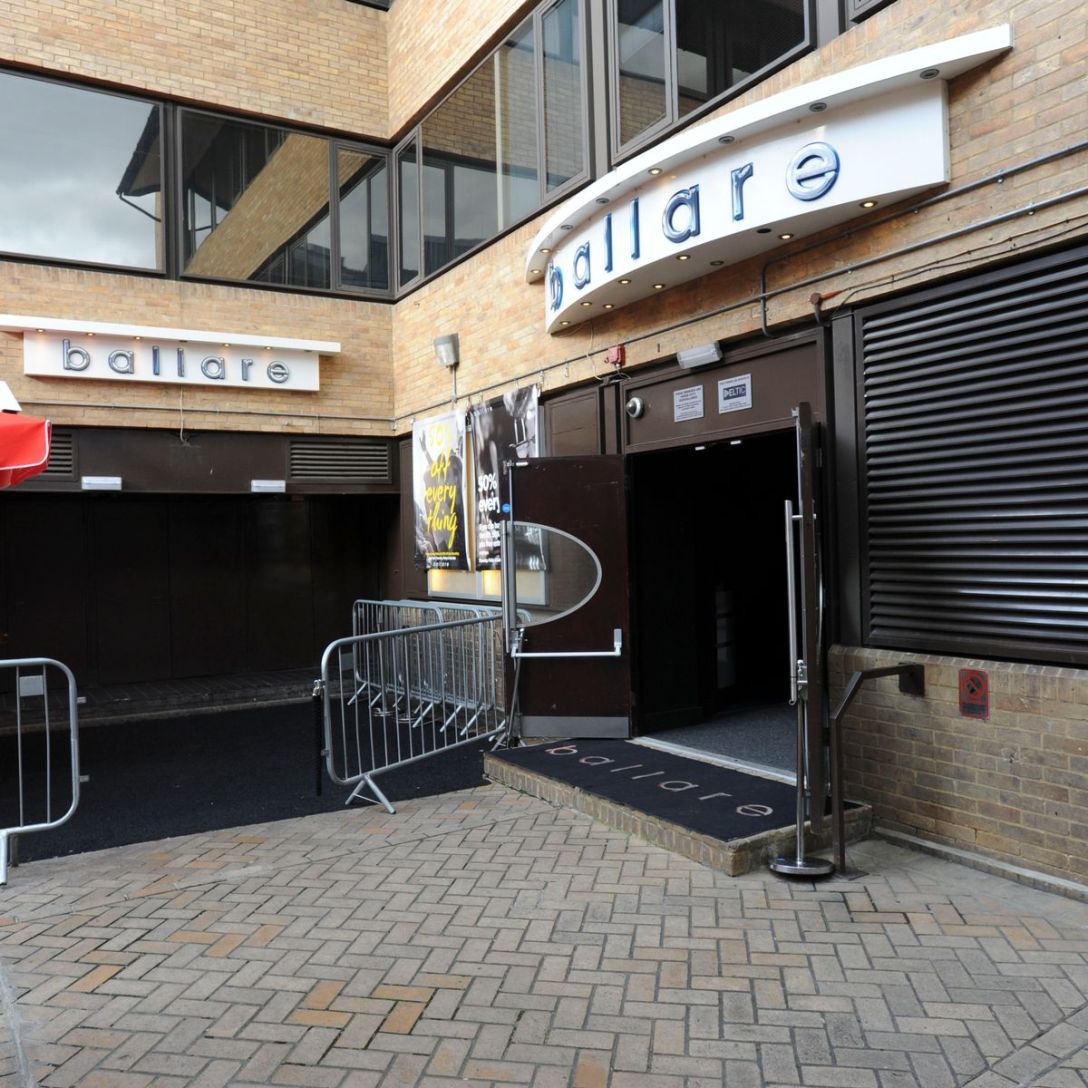
Cindies, the first and only question I had for you was, what are you? I couldn’t find you anywhere on the map (as with Life), and it was then I realized that you were steeped in time, left stuck in an era where you were not Ballare, but Cinderella Rockerfella’s. Boy, what I would do to see you in that avatar. Or any avatar really. As I discovered during my undergraduate study, I am not a very club-party type of person. However, as I learned as a school student I am very much a human being that enjoys music, and loves meeting new people. It hurts, deeply, to learn that you were a place that facilitated both, whether through the smoking area, the lack of washroom access, or on the dance floor. That shared, lived experience appears to have united this city. I will now get none of it, and that, dear Cindies, makes me very sad.

After arriving in Cambridge, I threw myself into Cambridge magazines and facebook pages. The Tab had this lovely quiz on which Cambridge night-out I was, and despite knowing I was likely a night out at Market Square eating from Trailer of Life, or waiting in the Pret queue, I learned I was Wednesday Cindies. You may infer from that what you would like, but this result was meaningless to me till I discovered this wonderful Wednesday Cindies playlist on Spotify.

That discovery has led to a lot of self-reflection and inquiry. The Tab’s quiz was not necessarily designed with the scientific process in mind, but truly, this time, it felt like they got me right, spot on. At my core, I am a nostalgic human being that looks at History with rose-tinted glasses. On Wednesdays, you appear to have been an embodiment of that, which makes your closure even harder to bear.

If you’ve reached this far, you’re likely asking: but Tejas, you’ve been here seven weeks, why didn’t you visit for a socially-distanced evening earlier? I do not have an answer that does not sound like an excuse, but put simply, you were not at the top of my Things to explore in Cambridge list. That is a shocking answer, and you may be quickly drawn into resentment, but I urge you to read on, for Cindies, you were on the list. You were just slotted away for when I felt I had settled in sufficiently to accept that the work wouldn’t get done anyway so a night out would be of zero-harm. As a postgraduate fresher, but a fresher nonetheless, I have not settled in to this level as yet. Consequently, I reserved you for mid-way through Lent. Far enough for me to feel at home, close enough for me to smell you – whatever your smells are.

For a place that seems to adore its legacy, from the limited information we the public have been given, Cambridge appears to be ripping a piece of that legacy’s soul away from itself. This may be symbolic of several things: capitalism, a rift between town-and-gown (to quote the 1900’s), and the impact of the coronavirus pandemic on local business and the hospitality industry at large. This conscious uncoupling, whatever the circumstances, feels rough. It is personal, insofar as I will not get to experience you, but more so because as a student of the University, I felt attached to your existence. Knowing you were there felt like sufficient evidence of the statement Cambridge has an active nightlife. Knowing you are gone means I cannot claim that sentiment anymore, despite the existence of other clubs.

We may find another place, another room to blare out the Wednesday Cindies playlist. I may listen to it alone sitting in my room wearing pyjamas. Even with strobe lights however, these places will never replicate the atmosphere of that corner in the Grand Arcade (or Lionyard, pick your poison).

With this, and with the knowledge that people have Camfessed they would transfer if you shut, I say goodbye. Having written all of this, I am still uncertain whether I am saying goodbye to the ground upon which you were built, or to the people that made you who you were. Thus, I personify you, and say goodbye to the spirit I felt destined to meet and feel robbed of completely.

Thank you for existing, Cindies, and for making me feel more strongly about my desire to cherish more of the Things to explore in Cambridge list I built while waiting to relocate here.

Somebody else will miss you. Unfortunately, I just missed out.

Love,

Tejas

In Quest Of: The Perfect Shave

[Writing Note: I’ve had this story in my head for a while, but till today – when I actually feel like I got as close as possible to The Perfect Shave, I wasn’t very sure how to articulate it. Since this morning I’ve been feeling the side of my cheeks with the back of my hand exalted at the smoothness of the curve, and I think now’s as good a time as any to tell this story.]

I don’t know if my mother can, but I can very clearly remember the first evening I learned how to shave. It was in Grade 9, and I had a pencil-thin moustache going that we both deemed unnecessary. One of my teachers commented on it jokingly at school, saying I needed to shave, and that evening after I relayed the news to my mother, she took it slightly seriously and pulled out one of the travel shaving kits my dad had brought home from a recent Emirates flight he was on. We stood under the dim light of the washroom, me with this new tool in my hand, and after I figured out how to get the foam on my face, my mother stood behind me guiding me to do downstrokes. I washed my face – and that was it. I looked like a baby again. I remember speaking to my father that evening and he chuckled. He’s sported a moustache all his life so after some laughing he asked me about what I used to shave and those sort of things.

After that evening, I began shaving maybe once a month – if you can call removing a moustache shaving. I got my moustache taken off me every time I went into the barbershop, and in general, rarely let it loose, although there are some photographs on facebook to the contrary. At this time I had no hair growing on other parts of my face, so it was all about moustache maintenance – something that was painless, easy, and not at all time-consuming. This phase must have lasted two years. During this period of time, as everyone in class began to go through puberty, we saw each other at our worst. I remember some horrific moustaches my classmates had – and I belong firmly within that club.

Things changed in Grade 11 though. The passage of time meant that I was growing some hair around my face, and being School Captain and a stickler for rules, I used to be disciplined for my grooming quite frequently by our faculty advisers. I must’ve gotten called out atleast once a week with the Tejas, Shave! comments, and some of my friends told me to as well. So I began to take it seriously. I’d shave regularly – I reckon once every week perhaps, mostly when I was in the shower. I wouldn’t use shaving gel or foam, but in the shower, feel around for wherever there was hair on my face and try getting it off. Then once I was out of the shower, I’d look in the mirror, feel around for any spots with my glasses off, and then look at the final product with my glasses on – getting rid of any stray hairs, and moving on. This habit was birthed out of my terrible early-morning skills. I never had the time for a patient shave. I was always late getting up, late into the bath, and everything was a rush.

It was only to family functions and other get-togethers that my mother carried out the check. Apart from outfit checks, the shaving check was a new one for her, and one she forgot to conduct sometimes (notice the shift in blame), which resulted in me showcasing my moustache at some gatherings. She was not thrilled in the car. The dose I received was the you look old, along with some comparisons to those without the moustache. She was very smart, I must say. I’d like to think that I’d grow out the moustache for occasions to get the comparisons to my dad – because puberty had seen my face morph into his after looking so much like my mothers for the most part of my life. She saw right through my laziness. Grade 12 was when I became slightly more responsible, even with moisturizing and self-care.

Then I went to University.

Two things really suffered: skincare, and haircare. I stopped moisturizing, oiling my hair, and shaving in general when it was cold. The first year was okay because I think my body was still in the whole puberty phase so it was a lot of patchwork, my face. Second year onward, I couldn’t explain to you where the hair would grow from. I’d go to sleep freshly shaven sometimes and wake up with rough skin – the result of the hair follicles erupting from the surface. I hated it. I began trying to put off shaving for as long as possible, and the time between each shave grew. In my fourth semester, after one of my batchmates candidly told me I looked better clean-shaven and we had an extended discussion about the state of my face and hair, I resolved to shave each week, promptly, and prevent excess beard growth. My motivation collapsed within the first month.

Second year was truly the lowest point. I grew out my hair a lot and shaved very little, only for times where I saw photo opportunities happening. My mother really took this to heart, and she’d drone on and on about how her grandfather and father shaved every single morning. This is true, my great-grandfather legitimately shaved every morning. But I had gotten so bored of the story it had no impact on me whatsoever. My dad rarely put any pressure on me. He couldn’t care less about the shaving. It was more about the hair for him – was I oiling it? No. So I’d hear a lot about that – especially after some bad haircuts I had. My mum couldn’t have even asked my father to speak to me about it because when he was in College, he had grown out a beard – and had one till his wedding day.

The story is that my mother couldn’t recognize him at the airport because he had shaved the beard and just had a moustache left.

Third year onward I began to care a lot more, which coincided with a different change in my life. I’d shave regularly and take care of the way I presented myself. Especially in the monsoon semester, when things were bearable and shaving was easy. In the winter semester, I couldn’t care less till summer rolled around. The water was cold, the razor felt bad on my skin, I hated everything. Summers made it easier to be clean-shaven because it prevented the accumulation of sweat on the face, so I was pleased with that change.

The biggest change throughout my time at University though was that I became someone more aware of this process of shaving. I began to consider carefully what shaving gel/foam I purchased, the type of blade I was using, and the aftershave care for my skin. I became aware when I missed spots. I cut myself a lot. I watched a lot of shaving tutorials and generally started to invest more time in the shaving process – sometimes upto 30 minutes if the gap between my shaves were large. Other small experiments included the electric razor – which I carried because my dad had told me to keep one, but quickly decided I didn’t enjoy. But this change of becoming more cognizant of the effort to look clean-shaven meant I started to see things I wasn’t really seeing before. I began to notice things like graining and patterns in the way my facial hair grew, and started to spend time ensuring my side-burns were even post-shave.

However, this entire journey of awareness meant I also became acutely aware that every shaving stroke I made was imperfect. I didn’t know what perfect was yet, but to my mind at that point, every single stroke felt like it left some hair follicle untouched by it’s steely graze, and that disappointed and infuriated me. This was particularly true during internships, where I’d spend time on ensuring I was presentable each morning and shaving each morning if I had to. I’d always feel upset after my shaves because there was just one bothering spot. Most of the time this was at the bottom of my neck, toward the edges, or around the sideburns and ears.

In the last six months, when I basically grew my hair and beard out – shaving maybe thrice or four times throughout the pandemic, I decided that moving to the UK would mean shaving every day. I made this decision consciously. I read a lot about how you need to shave only when you need to shave – but the rate of growth for my facial hair was quite high, and roughs appeared every other morning, with a wide enough green to play golf on by the end of the second day. So shaving every day was the going to be the way to go. This was also helped by the fact that my classmates were right. I felt I looked better, and felt better, when I was clean-shaven. I like having soft-skin it appears.

Since I’ve moved to the UK, every day has been this struggle. It appears that although locations change, imperfections do not. So I felt every misplaced stroke, every knick, and every complete, imperfect shave. Running the back of my hand across my cheek I’d feel no hair but my skin would look green which meant hair follicles were just on the edge of the surface, ready to come through. I’d miss spots even on full strokes. Sometimes the razor just wouldn’t catch things fine enough so I’d do multiple strokes.

I was very tired with this, and that turned into an obsession. I was fuelled by these imperfect shaves each morning, and I decided that one day – and sooner, rather than later, I’d have, what to my mind, was a perfect shave. A shave where every stroke got rid of all the hair in the area through which the razor passed, leaving behind, at the end of it, a clean palette upon which all of the hairs may grow. The idea was to prevent re-stroking, or having to pass through the same patch of skin to eliminate some hair. Usually restroking means approaching the patch from a different angle, and believe me, I’ve done some wonky ones, but eliminating it would mean I’d save time, and I’d also save myself some shaving gel. Incremental savings, but savings nonetheless. I’d also save quite a bit of water.

Now, my reading and research pointed to various products I could use to assist me. I’m not going to fall for these new technologies. If people can shave with a single blade and achieve success, I wasn’t going to buy a 4-blade razor, or a 5-blade razor. I’ve had some disasters with those in the past (including knicking quite a bit of skin across my thumb; I had my glasses off). I wasn’t going to invest in new, fancy shaving gel, or a cool new aftershave, or lots of product. Since I’ve taken up some new hobbies, I’ve learned that the greatest tools are the tools you own. So I was determined to carry on with my Mach3, Nivea Shaving Gel, and Aftershave Cream.

I’m a pre-shower shave guy, so I knew the one thing I’d have to incorporate is washing my face a little better. As the days went by I started to see that yielding results, particularly because I have oily skin. That was perhaps the only big change. As for the rest, I decided to take more time, be more patient. Having decided I’d shave everyday, shaving had become a part of my daily routine, and a part of all the time I had dedicated to getting ready for the day. Being patient though, meant reviewing each stroke, and slowly eliminating restroking even if it yielded imperfect results.

That’s the thing about repetition and recognizing errors and flaws. If you do something long enough and weed out things you’re doing incorrectly, slowly – chances are you’ll get it right soon. It took me forty-four days. Forty-four shaves.

This morning, I woke up and had the perfect shave. I celebrated by treating my face to some more TLC.

This is what I felt like:

Creed represented everything I wanted. Just the one perfect shave. At the end of it, I’m certain critics would tell me I did something incorrect to detract from my glory, but I can tell you – it felt, and now (I checked), still feels – perfect.

I don’t know if this will repeat itself. Or when. I don’t know if my motivation to shave will drop. I don’t know if it will stay alive. I could grow out my beard again – it’d be back in a week. All I know is that having achieved this, I am now perpetually in a quest for the perfect shave. I have tasted success, or what I define to be success, and I will search for this now, every single morning.

I know it may not occur. When I am unsuccessful though, I hope to look back at this post and think about the journey that brought me to this point. It has been a glorious path. I am likely to adventure and try out more eco-friendly options, like safety razors and cartridge razors rather than the blade ones I use at the moment – but even there, I will continually remain a student of this quest for the cleanest shave and the smoothest skin.

Fin.

MT Week 4: Day 6

The Saturday has come to a close. Would you believe me if I told you I slept for 11 hours again last night? Whether or not you believe me is immaterial, for my sleep-tracker says I slept 11 hours, and it appears as though, sleep-cycle wise, I am the healthiest I have been in years. There is a consistency, I am not over-stretching myself, and I sleep when my body demands it. It feels glorious.

Today was when media outlets began to project Joe Biden and Kamala Harris to be the next occupants of the White House. This is truly a small step for America, and I’m curious to see how the international order, that has become so used to searching within for leadership, responds to America’s attempt to lead the world again. What I most grateful for though is that climate change is now certifiably, real.

In the morning I completed a run, spoke to family, and got around to reading. I’m currently wading through my Jurisprudence reading list, where we’re reading Lon Fuller’s The Morality of Law. I have to admit that thus far, the subject is sailing over my head, but I am learning new things each week, and I am looking forward to my December break, where I hope to spend some more time with the texts we’re reading and the commentaries, and really formulate some opinions on the text grounded within it’s internal logic. I’m looking forward to reading Hart again. For a start though, I have begun to appreciate why jurisprudentialists and philosophers ask themselves What is Law? – because at the moment, I find existing answers slightly unsatisfactory. Atleast the ones I am exposed to.

The afternoon saw some ice coffee from The Locker, a time-lapse, and a lovely walk along Midsummer Common with an undergraduate third-year whom I will be working with through this academic year. I’ve met quite a few undergraduates and doctoral students here since I’ve arrived, people who are outside the Law department and program, and people within, and every person I’ve met has amazed me with their story. Sometimes I’m left wondering if I could just spend every minute here, instead of studying, meeting new people and understanding their journeys – what they find fascinating and what excites them, what got them here and what they’re going to give back. It feels like these are things to hold onto in reserve particularly when you’re uncertain about your motivations being here, if that ever occurs.

In the evening we celebrated the projections with some take-out, and now I’m back to reading more Jurisprudence. I’m taking breaks to watch clips from The Office because Biden is from Scranton, and that is amusing me to no end.

MT Week 4: Day 5

Yesterday was an incredible day.

In the morning I had a workshop for International Environmental Law, followed by a lot of free-time to read before an evening full of adventure. We hosted our first event for the International Law Society, which was delightful. Although attendance was a fraction of the number of individuals that joined our facebook group, it was really good to see that those who did attend were rather excited at the prospect of what the group had to offer – and more importantly, they came with a bunch of ideas. Hopefully we can use that to build something successful and sustainable in the Lent Term and beyond. After that I had my first team meeting for the moot that I’m participating in. It’s a joy to be mooting again, quite a thrill to be working with some new people. I’m eager to see how things go.

I think the excitement exhausted me because I slept 11 hours, and woke up this morning to get going on my reading for the next week. Lockdown means that I’m not going to get my sports quota in any time soon, so some time around the afternoon I walked along the river to clear my head and do some photography. Back at home and I cooked myself some risotto and came back up to do more work. Having spoken to my parents, it’s now been about 4 hours since the risotto business was done, and I’ve done nothing, so my goal for today is to now churn out the newsletter and then seriously, get cracking on some work for the rest of the day.

Tomorrow I’m hoping to get a run in just as the sun rises or thereabouts. Let’s see how that ambition fares.

MT Week 4: Day 3

Another week of interactive sessions down, and I feel Week 5 coming at me faster than I did yesterday. This morning was fairly slow, which was nice: allowed me to get into my reading and follow the US elections just to see the kind of stuff happening there. In the afternoon I had my interactive session, where we focused on environmental regulations in the maritime environment (for which I have a workshop tomorrow morning).

That led to the highlight of my day. I spent my afternoon preparing paneer tikka masala for my hostel neighbour from GNLU, and then went out to meet another friend for coffee. We realized that owing to conflicting schedules, the International Law kids tend to rarely get the opportunity to speak to the Corporate Law part of our cohort, and we were meeting after nearly a month. A nice long walk around the city centre later, we parted ways and I went off to do my last erg session for the month (and the Term, in all likelihood).

This evening, I was with a different senior from the Boat Club, who really knuckled down technique on the erg, getting us to focus on separation and building out the back-stop and the catch, and each part of the stroke. I had a ton of fun, and genuinely felt my strokes in parts of my lower back I did not know I had. The other reason it was enjoyable was because this senior made me laugh a bit – he pointed out to my knees at one point and told me to complete the arms before moving my legs. Essentially by not separating, I was ending up in this weird position where my arms would invariably come into contact with my knees. On the stroke itself, my knees were getting slightly wobbly. Through that exchange, I was reminded of the countless times I was told about my knock-knees in school. Most races, the knock-knees would make my parents worry I’d trip over. I giggled.

The night was just a delight. In GNLU, every Wednesday was paneer & ice-cream night – and we were able to recreate that tonight, together, which brought a little bit of Koba into Cambridgeshire. The lockdown means it’s difficult for us to recreate this again before Term ends, but we’re going to try – and I’m hoping to try out some other things I learned during the lockdown in India. It’s always more fun cooking for a crowd.

MT Week 4: Day 2

You know how I keep referencing Week Five Blues and saying that I’m not going to let it get to me? This evening, after a rather tiring day, I spent some time on the phone with my parents theorizing why Week Five Blues exist? What brings them on? What sparks them? What makes it an affliction that unites the entirety of the University’s population? I haven’t experienced them yet, and I hope I don’t feel disappointed next week, but my working theory is as follows. It’s the realization that you’ve done so much already (and remember so little of it), but that you’ve got halfway left to go before the end of Term, which is a fair amount of work to come. Alternatively, it’s the realization that you’re behind on work, and that consequently, you have to make a choice about whether to catch-up to work from last week, or begin afresh from the subsequent week – letting go of past readings & starting anew. In either case, it means that time away from Full-Term is still going to be loaded with reading and reflection, and perhaps that causes some amount of being blue. I shall overcome. We, as a community, shall overcome.

Today, though, was quite something. Woke up by 7, did some reading – and had an interactive session for the International Human Rights Law course. Today we were discussing human rights bodies. My interaction with this subject has largely been through the lens of moot courts, or reading papers I found interesting, and although taught at University, I had never considered the subtleties within treaties, and linguistic differences in output that these bodies produce. It was a really nice way to feel awake, and at one point, I legitimately felt like the neurons in my brain were absorbing information and snapping into life.

After that, as I’ve recently been appointed as a General Editor for the Cambridge International Law Journal, I was given some training for my role. That was rather enjoyable. I’ve loved editing because it feels like you have the opportunity to play a small part in somebody’s writing process. It’s a position of tremendous responsibility, and where feedback is given, it’s an excellent exercise on how to write critique that is legitimately helpful to the author.

Then I had a workshop for International Human Rights Law, on forced labour conditions and the International Labour Organization. Before that I cooked & did some preparation for a fun evening dinner I have planned tomorrow. Coming back though – workshops, on the LLM, are essentially small-group teaching where the faculty:student ratio of 1:13 is respected and adhered to. It was interesting because there was nowhere to hide at all. I can only imagine how the undergraduates feel during supervisions.

All of this listening made me crave a power nap, so I gave my body what it asked for, spoke to the parents, took a quick walk – and then had a 7pm Jurisprudence interactive session. Why 7pm? Well, yesterday I had a conflicting Global Governance workshop, and the Professor was kind enough to accommodate the conflict by offering an online session tonight, which was fantastic. Just 5 of us going through legal abstractions – yes, Jurisprudence is still going over my head.

All of this, and it felt like it was time to give thanks for everything this place is allowing me to live out, and remember everything I have to give back to the community. That closed out what has felt like a forever Tuesday.

MT Week 4: Day 1

Today’s been an intriguing day. Having slept for 8 hours, I woke up, completed some reviews of submissions I was reading – and got to my reading lists once more. We’re at Week 4 now. Week Five Blues are close-by, it appears. As of yesterday, we’ve learned that we’re going to be on National Lockdown from Thursday. However, this seems to be a rather soft lockdown – with Universities and Retail that’s Essential continuing to be open. Restaurants are going to remain open for takeaways. The decentralized nature of decision-making at Cambridge means we’re awaiting instructions from College and the Faculty of Law on the implications of the lockdown on decisions that had been communicated to us earlier in the year – particularly on in-person teaching. For me, as an off-site student, something that I’m waiting to understand is if I will still be able to visit St Edmund’s – and to what extent I can interact with my College.

I knew this was likely before I signed up to study this year, so I felt adequately prepared for this, and I am still feeling that way. I will continue to study and make the most of what this place has to offer. If I feel like it gets to me though, I will reach out for any help I need.

I had class in the afternoon, followed by a Graduate Workshop. Where we have classes that have more than 13 students signed up to study a given subject on the LLM, we get workshops that accommodate only 13 people twice a semester. That’s really helpful, and is the small-group teaching that allows for broader discussions about subjects we’re clearly passionate about. Today’s agenda: common spaces, something I adore with every fibre of my being.

Having received a notification about a book that I had to return, in the evening I cycled to Sidgwick, returned the book to the Faculty, cycled to College, and came home. Now I’ve spent an hour watching YouTube videos – so I’m going to spend the rest of the evening preparing for my 9AM tomorrow.

MT Week 3: Day 6

This afternoon, I went out for lunch with an undergraduate Law student at the University, someone I’m working with as a part of Decolonize Law Cambridge to discuss work and other things. Over the course of our conversation, he brought my attention back to this blog and it was at that point that I realized that I didn’t write all week after Monday. For all the talk about recording every impression this place makes on my mind, I was upset with myself for not actually following through on it. Particularly because I heard about this Theatre teacher in Singapore who has been doing something very similar to what I do since Blogspot came about (which is a while ago on the blogosphere now). I got back home and told myself, that’s it, I’m going to spend the entire evening writing – and churn out six quality pieces about the week that’s gone by. One essay in though, it felt pointless. The day’s past, and I feel like I’d be dishonest to myself and to anybody reading the blog in saying I wrote this on that day. Although I journal and take notes everyday to help me fill in gaps where I’m unable to blog, the conversion of those thoughts into concrete sentences just never feels as raw as writing observations on the day of events feels.

Henceforth, therefore, I shall strive not to miss days – because I don’t want to. If I do however, I’m not going to strap-together or plaster-together a string of posts that act as observations from the week. I think I’ve been doing a lot of that because of my own obsession with completion and counting, but someone pointed that out to me as a character trait of mine last week and I was very amused with myself. I’m legitimately obsessed with numbers – because they never lie, yet in my case, I’ve been using them to further the notion that I am a daily blogger.

I’m a blogger, a writer. Daily-ness happens frequently.

The rest of the evening went in a secret project that may be revealed to the world some time in the future, some music, readings & work. We’ve just discovered we’re going to be on lockdown beginning Thursday all through to December the 2nd, which is just 4 weeks. I hope this helps contain the spread of the coronavirus – it would be very difficult to the NHS and for hospitals here to have several patients to tend to. I need to use this week to figure out a regime that replaces all the sport I’ve been doing in the past couple of weeks with some other forms of fitness. Maybe I’ll do hockey drills on the Common – we shall see.

MT Week 3: Day 2

I woke up in amazement of everything that had transpired last evening. I wrote about pinch me moments, and it feels like I want to hold on to every single moment of every single day and let it linger in my memory palace.

A morning lecture and then I was done for the day, free to spend the rest of the afternoon and evening on readings for tomorrow’s interactive session. A quick trip to the bank and I got back home and had the opportunity to eat pancakes at home with my housemates, a treat that I thoroughly enjoyed.

I should explain my living situation. I’m a paying guest in a house – so I live with a family. The house is always a lovely environment to stay in because it’s rarely empty. There’s atleast one person at home most times of the day. It’s great to come home to that, and to pop down into the kitchen for conversations whenever I’m taking a break – for moments like this evening’s pancake adventure of course.

I’m not singing Chapel Choir this weekend, but we just received an e-mail from our Chapel Music Director with recordings from last week and I can identify moments within those recordings where I wasn’t confident of the sound that would come from my mouth so I’m quieter and suddenly I get louder when I don’t necessarily need to. This weekend I’ll be practicing music for the Symphony Chorus, and hopefully all the practice gives me the confidence to trust my vocal chords once more. I know I’ve written this before, but I’d like to be as free as I was when I was a child. It was just my parents that thought I sang well initially, and that gave me the liberty to explore singing to my heart’s content. I’d like to do that of my own accord once more.