Survivor Guilt | Dear Edward, by Ann Napolitano

Dear Edward,
by Ann Napolitano
Published by Dial Press (2020)
Rating: 
***

Introduction 

Dear Edward was one of my one-day class reads. It was a really, really quick, page-turner that took up a Monday morning and got done by the time I went for lunch. I came across the book on Goodreads and the blurb had me intrigued enough to dive right in. Survivor’s guilt is something I find intriguing because it feels like such an odd facet of human behaviour. Of course this is a sweeping, generalized statement, but in society, we’re so used to switching off and stepping away from responsibility, that sometimes we take responsibility or blame ourselves for things that we do not necessarily have control over. Hearing that a book delved into that, into the thoughts that go on in that process made me fascinated instantly. I dived in with hope, as I do with most books, but as I’ll explain in this review – I was a little confused by the way the plot developed.

Plot

Really simplistic. A plane crashes en route Los Angeles from Newark, killing everyone on board the aircraft except a 12-year old. Through narrative flashbacks and switches to the present-day, the story takes us through Edward’s life after the crash, and what he remembers and deals with as he attempts to cope with life after – without his family, adopted by his uncle and aunt, and being the most famous 12-year old in his neighbourhood.

The flashbacks deal with observations of various characters on the plane and what they were up to in their final moments, which plays into a key plot device of foreshadowing the latter half of the book where Edward discovers letters addressed to him by the relatives of all those individuals.

Something I found out after finishing the book was that this was based on a crash that took place in 2010, killing everyone except a 9-year old Dutch boy – a story that captivated Napolitano’s imagination so much that she knew it had to be told.

Struggle

Napolitano does an excellent job of portraying the struggle and unease that comes with surviving trauma. A large portion of this I felt came out of the dispassionate, disconnected, neutral narrative tone that was adopted to the entire book, insofar as it felt like there was always an arms-length distance between the reader and everything Edward was experiencing. In a lot of ways, the book’s development was almost a social, scientific observation of Edward’s actions and the actions of those around him – with fact and analysis intertwined and behaviours explained and rationalized as best as possible.

A key element that I felt added to that tone was the air of mystery that surrounded every character. There’s very little attention given to the backstory of every character, and even while describing events on the plane, or things Edward goes through at school, there’s very little diving into Edward’s past. The only time we see it happen is with Shay, another character central to Edward’s development, but this comes quite late on in the entire story as Edward breaks down walls he’s built around him to protect himself.

Clichés 

One of the things I found disappointing was the way in which Napolitano portrayed some characters, which allowed for the furtherance of clichés and tropes about professions. A key example here is the flight attendant, who is unprofessional in dealing with passenger requests on a regular basis and feels extremely out of place compared to other characters in the book. There is a classic stereotype associated with unprofessional staff in the hospitality sector, flight attendants included, and Veronica’s character allowed for the furthering of that stereotype by latching onto it and not creating any depth of character for them. Where characters are introduced in novels – especially coming-of-age novels, I find that these characters need to be central to the growth that takes place – and I didn’t really see that happen here.

The Ending

The plot arc was set up so wonderfully, especially with the dispassionate narration, because it was all so expected. Once the letters were introduced, it was a certainty that Edward would read them and learn things about people wishing things for him or wanting him to do things and fulfil the life that they believe their loved ones would have had. However, I expected that this is where Napolitano would introduce some amount of emotion into the story – to inject the feeling that would have brought Edward to life – a character that is impacted by what he reads. That would have imparted warmth to me, knowing that every event, every interaction Edward had did actually impact him.

Au contraire, reading the chapters about the letters were the portions in which I felt the storytelling was the most cold and the most distant. It was glossed through, glanced over, and felt like it was put together to help piece together the romantic conclusion the book had primed itself for once Shay was introduced.

That was unfortunate.

Concluding Thoughts

I wish we had a more fleshed out story with a little more soul. This is clearly a heart-wrenching premise, but it needed more for me, and that’s what impacted my rating the most. Read for a depiction of the kind of guilt that’s difficult to put into words.

Science, Actually | Where The Crawdads Sing, by Delia Owens

Where the Crawdads Sing,
by Delia Owens
Published by G.P. Putnam’s Sons (2019)
Rating: *****

Introduction

My book picks this year have been eclectic, but that’s the kind of spread that brings me the most amount of joy in my reading. Over the last few years there’s been a surge in the volume of historical fiction being read. I tried putting the genre aside for a while, but there’s something wonderful about being able to travel through time and live in a distinct period and learn about the culture that prevailed: the good, the bad, and the ugly. Delia Owens’ debut novel shows us just about all of it, and is going to rank high on my year-end list for sure.

Plot 

The main storyline takes us through the life of Kya Clark, between 1952 and 1970 (ages 6 through 25) as she grows up alone in a shack in the wet wilderness of North Carolina, having been abandoned by everyone in her family. We understand early on that Kya is a survivor, foraging and teaching herself skills to participate in a limited manner in the community, to get her essential supplies among other things. To the townspeople though, Kya is labelled as “the Marsh Girl”, uneducated, poor, and living alone and disconnected from the rest of civilized society. Owens introduces the centerpiece of the book: Kya is on trial for the murder of Chase Andrews, a rich town kid who is/was her love interest. Around the trial, Owens threads us along on a date-jumbled journey to understand the harsh reality of Kya’s life, and the reality that the public understands.

Nature 

This is a very vivid book. One of the things I learned after completing it was that Delia Owens is an American wildlife scientist. This shines through in her writing, which in some portions is so intricate – while describing foliage, or describing the kind of fish that Kya manages to get her hands on. Owens is skilfully able to tread this fine line between painting a perfect picture through her words, without her descriptions becoming excessive. That balance stems from the fact that Kya is gifted in her own understanding of wildlife and nature, allowing for nature to feature as a character, almost, upon which both Kya, and the furtherance of the book’s plot and narrative rests.

Kya’s reference points all stem from her surrounding environment, a fact that mirrors reality. Nature clearly plays a role in our upbringing (cue the nature versus nurture debate), and Kya is no different. This use of nature though, in making it the focal point of Kya’s life, allows for her depiction as a feral being, Mowgli-esque. Her isolation enables her to understand human interactions with nature far better than others, and her relationship with the environment is fundamental to her identity. Owens’ exposition of this relationship, by including wordy descriptions of the environment while critical scenes are taking place: abandonment, return, and love, made me feel that Kya had a personal relationship with nature that was left unexplored, and as all good books do – it left me wondering what was left unsaid about that relationship, and where it could go next.

Class 

Historical fiction leans on conflict and division very frequently, and this book is no different, relying on the class divide to allow for the development of the trial, and the tension in that trial even more. Kya is supported by a minority of the population, and her exclusion from the rest of the public speaks to her background and economic class. However, something I found interesting is that for a book set in 1950’s North Carolina, there was little direct mention of race – a choice that I found curious. Where race is introduced, it didn’t necessarily play a large factor in the book’s plot development – a creative choice I respect. The substitution with economic class allows for a less-traditional exploration of the divide in North Carolina at the time, and one I admired.

Conclusion

This was understandably one of the bestsellers last year. I’d sit and read it again in a heartbeat. Would recommend highly.

A Life, Lived | Stoner, by John Williams

Introduction 

My weekend has been filled with reading and books, which is just the weekend I needed to recover for the week that lies ahead. On Friday, I spent a couple of hours on Goodreads, trying to figure out the stuff I wanted to explore and get through by the time Sunday night rolled around. Stoner was a fresh find, an indirect find, so to speak. I saw a book about John Williams’ life – a book that described itself as an essay about why Stoner was the perfect novel, and I was intrigued. I’ve only ever heard of the name John Williams in the context of film scores, so to hear that there was this celebrated novelist I knew nothing about who seemed to have a cult-like following for this “perfect” book, I had to read it. Thus it was that I sat on my desk last evening after a scrumptious meal and I made a new friend: William Stoner.

Also, no, the book is not about weed.

Plot Summary

John Williams navigates you through the life of William Stoner, a lifelong academic and a Professor of English at the University of Missouri. You’re introduced to Stoner posthumously in the first chapter – an introduction that lays down clear benchmarks for the kind of expectations you should have from the book. Williams tells you in no uncertain terms that Stoner was an ordinary man, who had an ordinary career – who did nothing extraordinary. Over the course of subsequent chapters you learn about Stoner’s upbringing on a farm, and you’re transported through the different phases of his life and the different decisions he takes – in finding love, in working on English Literature, in understanding the impact of war. It’s really an unremarkable plot. Quite simply put: it’s one man’s journey through life.

The writing, however, is incredible.

Characters

It’s pretty evident from everything I’ve said above that the character: Stoner, is central to the entire plot. He drives it forward, slows it down, and brings it to a close. Some books which place a singular character at their center, or a singular perspective at the forefront struggle because they don’t establish the character’s voice early on. As a result, expectations are wayward. Williams does this remarkably well.

First, he stays away from writing in the first person at any point. The entire book is told in third person, giving the author more control over the kind of observations he is able to fit in about Stoner’s life – about Stoner’s temperament, for example.

Second, Stoner is set up very, very early on in the book.

You can tell that he’s in for a life of hard work and challenge. This isn’t exclusively because of the description of his farm-upbringing. Williams also achieves this end by labouring through descriptions of Stoner’s entire thought process. When, early on, Stoner is faced with the decision of going to school or continuing to stay on the farm – Williams doesn’t cut to the chase and reach the outcome (Stoner goes to University). Instead, Williams explains everything that terrifies Stoner, what excites him – and why he ends up acceding to his fathers’ pushes. For me, as a reader, it helped me understand Stoner’s motivations, but it also laid out how much thought (sometimes fruitless) the character put into everything he did. Thinking is hard work – and setting up a character who ponders deeply about everything, who doesn’t fully comprehend or rely on intuition early on in the book sets him (and you, the reader) up for everything that you’re going to see.

Third, supporting characters are eased into the story in small batches. Williams makes it clear that the focus is never supposed to be away from Stoner. Even when the scenery changes – like when Stoner moves to University, or the times change – like when World War I breaks out, Williams doesn’t introduce more than 2 characters into Stoner’s life arc. This clarity of writing allows each individual’s character arc to develop fully (only one character is written out early – killed in action), but more crucially, it allows Williams to lay out, slowly, Stoner’s dynamic and interaction with each person. That enables them to be more organically involved in Stoner’s life. This is best illustrated not through Edith, but through Gordon Finch. Finch is introduced as a friend. Stoner and Finch get on really well – exchanging observations about University life that you’d only ever exchange with your closest peers. Finch disappears, enlisting for the war, and returns in an administrative capacity more senior to Stoner. However, their rapport doesn’t change – and lasts right through to the end. Now, Finch was introduced with another character, Masters (the character who dies young). In my view, settling on a small group reflects the reality of the life of an academic. More central to the argument I was making though, is the fact that it allows for the development of more meaningful interactions with these characters – which keeps the spotlight on Stoner. As the reader, you’re rarely caught onto picking a favourite character: you’re firmly on Stoner’s side, interested solely in the kind of relationship and impact each character will have on his life.

Conflict

After I read the book, I went on to read a few essays I mentioned earlier – about why Stoner was the perfect novel, and they all point to the way conflict is explored. Each one of them highlighted how conflict was introduced at exactly when it needed to be in Stoner’s arc.

While I agree with that, I think some nuance exists in the kind of conflicts introduced. There are the big conflicts: the one with Lomax, the affair Stoner has and the conflict with Edith, the conflict when he tells his parents about continuing on with his studies in English Literature. However, conflict remains a central theme throughout the book – one that shouldn’t be ignored. Williams’ success doesn’t lie exclusively in the fact that he is able to introduce these big conflicts at the right time.

To me, a large portion of that success is owed to the lucidity of his writing of an internal monologue and the internal conflict that Stoner faces almost on a daily basis. We’ve explored this in the above section – on how this helps set up Stoner’s character. Here, what I’d like to concentrate on is the role of this internal monologue in those bigger conflict arcs.

I shall illustrate this through the conflict with Lomax (the conflict with Edith has too many layers and will give away too much of the book). Professor Lomax is another faculty in the English department who Stoner has several scuffles with, climaxing in the big scuffle regarding whether a particular graduate/doctoral student should receive passing marks in his oral examination. Now, while this entire scuffle could have been projected through the single dimension of being an indirect power struggle in the department between Lomax and Stoner, a large amount of the conflict’s introduction takes place through the internal monologue.

Stoner first notices this student when he sits for a graduate seminar Stoner teaches – and Williams elaborates Stoner’s thoughts at the start. In fact, Williams creates a narrative of doubt through every interaction that Stoner has with the graduate student – which culminates the introduction of the conflict with Lomax. Without these deliberate portions of the narrative devoted to exploring Stoner’s internal dilemma about how the student in question has been admitted, the larger conflict loses value. More importantly, what Williams is able to achieve is the opportunity to introduce a counter-narrative and a counter-characterization that is equally powerful by allowing Lomax to replay the entire monologue from a different perspective.

It is a phenomenal lesson in storytelling.

Concluding Remarks

I recognize that a large part of my analysis may not make sense without a reading of the book. Hence, please read the book. It is short and well worth any time you may have. The Guardian wrote about how the book had a ‘sad tone’, and how Williams himself was confused at why people thought Stoner led a sad life. I have to agree. There is a sadness to Stoner, but there is also joy – in equal part. Remember, Stoner’s life is ordinary. It is relatable. Therein lies it’s power.

I loved the book. As someone contemplating a career in the academy, this was just a beautifully told tale of someone determined to teach, and to love, to the best of his capabilities – while making mistakes along the way. A life truly lived. Another great book I’ve read in 2020, earning ***** (5 stars).

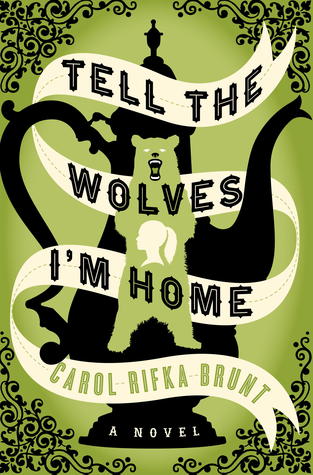
Tell the Wolves I’m Home | Carol Rifka Brunt

Tell the Wolves I’m Home
by Carol Rifka Brunt,
Published by Random House (2012)
Rating: **** 

This is a very touching tale. It was a good pick after Black Leopard, Red Wolf – especially because of the kind of emotions I was left it at the end of that book, the eerie, not so optimistic kind.

The book itself is very layered, but centers itself around a singular premise: grief. June is forced to cope with the death of her beloved uncle Finn, a gay man in the 80’s who passes away as a result of AIDS. She has grown up resenting her uncle’s boyfriend, Toby: a man blamed by her parents for her uncle’s death. June and Toby were also often competing for her uncle’s affection, attention, and time, leading to a complex relationship. His passing forges an unexpected friendship between these two individuals. June’s uncle was an artist, and through discovery of his art, we learn how grief impacts two people close to the departed and the way they share in their sorrows and their joyful memories.

There’s an emotional weight to the writing. Their friendship begins with a posthumous gift that Finn gifts to June through Toby. June slowly discovers Finn’s spirit living on in Toby – who replaces Finn as an uncle-figure in her life.

Rifka Brunt’s writing is enjoyable. The book itself, is wholesome. I’m not left with unanswered questions or unresolved emotions – but moral conflicts that are easily resolved, and a story that feels complete. I docked a star for its simplicity. Things seemed too convenient, for me – and I would have appreciated if June’s voice was a little more suited to her age throughout the book. Often it felt that Brunt purposefully chose a voice younger that June’s actual age, which takes away from the kind of relatability the book enjoys.

For the imagery and the symbolism, and the description of grief and friendship, this is worth reading.

Skyward (Skyward #1) | Brandon Sanderson

Skyward (Skyward #1)
by Brandon Sanderson
Published by Gollancz (2018)
Rating: ***  

Throughout this book, I felt like I was reading Artemis, by Andy Weir. I try to refrain from making comparatives, but the premise of both plots are extremely similar: a female protagonist attempting to disprove society, outer space, and an identity conflict which pervades across the protagonist’s relationship with other characters in the book. I left the book thinking it merited a 4-star rating, but the more I thought about the ending, the more my feelings, and consequently, my rating dipped. To be fair, I think this book is truly an exemplar of 3.5-star writing. I’ll attempt to justify my conflicting emotions throughout this review. A couple of things I’d like to clarify: this book isn’t like any other Sanderson material. If you’re coming into this book expecting something similar to Mistborn – it isn’t there. You’d rather adjudicate this book on its own merit.

Spensa has always longed to be a pilot like her father –  even when he flees in the middle of battle and is shot down by his own side in punishment for cowardice. Spensa is one of the descendants of a wrecked space fleet who found a precarious refuge in the caverns of a graveyard of a planet while an unknown alien species launches constant attacks, trying to destroy what civilization humanity has managed to recreate. Spensa and her family have to live under her father’s dishonorable reputation, even though Spensa is certain that he wasn’t a coward and that there has to be more to the story. Getting into flight school will be hard enough, but graduating will be even harder — many cadets and pilots don’t survive their first encounters with the enemy. In a predictable conclusion, Spensa participates in several heroic acts in an epic battle sequence at the end.

Let’s deal with the positives first, for I do think the book has plenty.

The characters are incredible. There’s a depth to each one of the individuals Sanderson creates, and each of them help with plot development greatly. What I admire about Sanderson’s writing is his ability to create character arcs for every one of his characters, without it feeling forced onto the reader. Sanderson cleverly masks each individual’s history: whether Cobb’s, Ironside’s, Gram-Gram’s, and even Jerkface’s, into their interaction with Spensa. This allows the reader greater understanding of each character’s motivations and weaknesses, with an easy comparison to Spensa’s own. Another result of doing this is that the focus never wavers from Spensa herself, which allows Sanderson to develop her to the fullest in this book.

Another component of the book I enjoyed greatly was the conflict Sanderson creates in the atmosphere. There are numerous levels to this, which deserves some appreciation. The first is of course, the conflict between the Krell and the DDF, which plays out in a very strategic set of wars. The second, is the conflict between Spensa and everyone around her – who doesn’t believe she is worthy of flying: either because of the fact that her father was a coward, or because she possesses a “defect”. Sanderson attempts to weave the two together in the conclusion – which I don’t particularly enjoy, but we’ll get to that later. The last, is the conflict Sensa senses in herself. Continuously driven by her fear of being labeled a “coward”, she resists using the term, and finds herself confused, at several junctures about whether her actions smell of fear, or of “cowardice”. This emotional conflict is a marvelous layer to the plot, which I think drove the narrative in this book.

Finally, Sanderson seems to have done some research before writing. I think the space opera elements of Skyward, in terms of the machinery and weaponry involved, is not any that’s present in literature today. The schematic drawings provided in-book were super fun to peruse through (although I feel like that’s something the publishing house added), the detailing was excellent. However, at times it felt like Sanderson got trapped in a pit of overusing the phrase “g-force” to describe any sensation Spensa felt in her Poco jet. The level of research I think tells most when it comes to M-Bot, which is a figment of his imagination, but I think, the funniest character in the book, with the wittiest one-liners. M-Bot’s technological prowess is phenomenal. Considering this is the first book in the series, I’m really hoping for more of M-Bot in later books to come. And more Doomslug.

Now, the negatives.

See, for all the joy Spensa the character gave me, I didn’t really understand several parts of her world. A conversation with a friend revealed that we were both equally clueless about how her world functions. To me, this is a big deviation from Artemis, which despite it’s own flaws, did a phenomenal job of world building. You almost had no questions to ask. Here, you’re left wondering how exactly/where exactly that world fits into our understanding of the galaxy, which I think is a bit problematic. Moreover, the lack of world building is an issue because this is the first book in the series. It feels like Sanderson lacked clarity about what he envisaged the world to be like. The first book, for me, is really important to gauge whether or not I’m going to be hooked to the series. Good first-books balance plot development and world-building really well, and Sanderson is capable of this: he shows us that through The Final Empire. This, however, falls flat in comparison. As a consequence, it feels like descriptions of the world in future books in the series are afterthoughts/additions to help plot flow better.

The second thing I disliked was the ending. I’m still actually quite confused about what actually transpired – because while I understood the action taking place on-ground/in-space, I didn’t understand the layering that Sanderson had done – in terms of Spensa’s final interaction with her mother/grandmother. It left a lot to be explained – something I’m hoping comes out in the next few books. I’m quite certain that it’s meant to be vague, to allow for development later in the series. The level of vagueness though, was a little too much.

To conclude: absolutely thrilling, fast-paced book. Great plot, amazing characters. Vague attempt to be profound at the end, unclear world.

You see my confusion? This is a 3.5 dilemma situation.

A friend of mine offered some good insight. I think this, unlike Mistborn, is meant for the younger side of the YA spectrum audience. An enjoyable read, but one I’m okay skipping out on. Which is sad, because Space stuff is usually right up my alley.

The Astonishing Colour of After | Emily X.R. Pan

The Astonishing Colour of After,
by Emily X.R. Pan
Published by Little, Brown Books (2018)
Rating: ***** 

Don’t let the number of chapters or pages in this book fool you. It’s a fast-read. Page-turning, emotionally engaging, and gripping, you’ll find yourself wondering where the time went as you finish. If you’re looking to get out of a reading slump, and fall in love with good writing again, this is a great starting point.

The story follows Leigh Sanders, a half-Taiwanese, half-American girl, as she struggles to cope with loss. On the same day she kisses the boy she’s pined over for years, her mother, Dory, commits suicide. At first the grief is overwhelming. She feels trapped in her childhood home with her distant father and the bloodstain marking her mother’s demise haunting her thoughts. Then, the night before the funeral, Leigh is roused from her nightmares by a huge crimson bird calling her name. She knows immediately the bird is her mother, the whys and hows brushed aside in the face a daughter’s longing for her mom. The plot then takes us to Leigh’s discovery of family she never knew, and her journey of “moving on” from an event she struggles to talk about or understand. All the while, her desperation to make contact with her mother once more drives her between the fantastical and the real, making this a journey unlike any other.

There’s a lot of plot depth to the book, which deserves a bit of analysis.

The first is the theme of identity. Leigh’s identity is clearly complex – she’s half-Asian and half-white, and Pan brings this out by describing how society views her. The Americans call her “exotic”, while the Taiwanese call her “hunxie”/”mixed blood”. Through these individual instances, Pan is able to portray the otherization that mixed-race people usually feel, without a strong connection to either cultural group. This conflict is also given a new layer by the presence of Axel, who is half-Filipino, and half-Puerto Rican. Their friendship and understanding, and their journey of family discovery points to the fact that both characters find comfort in each other – because there’s no other place they fit in.

The second, is how Pan tackles mental health. Now, the conversation on mental health has improved drastically – people are now more comfortable to discuss it in society, but Asian countries are notorious for their inability to accept diagnosed mental health illnesses as being real. There’s an ignorance in Asian society, which Pan is able to describe very realistically. Leigh struggles to use the word “depression”, unable to admit to herself that her mother suffers from the same. The suicide that takes place is without a note, and is committed by OD-ing on antidepressants, and several episodes are described in great detail in the novel. Pan is able to explain depression as it really is – difficult to understand, tough to explain and articulate. The biggest thing Pan achieves is that she doesn’t display “continuous sadness” as equal to depression, something I admired after I finished the book. Another achievement lies in steering away from psychonalysis or patient-blaming/patient-shaming. There’s no sugarcoating of the condition, or of death. It’s difficult, but the truth of depression is just that, and Pan’s judicious use of words deserves credit.

The third is art. Now, I wasn’t sure whether to highlight this as a theme within the book, but there’s layers to this which deserves some amount of description. Leigh, Axel, Caro, and Dory, are all artists. Each, unique, and each, with a different connection to their art. Leigh’s father, is an American academic. Stereotypes lead us to believe that strict Asian parents undermine art, viewing it as being a gateway to University, or a skill that deserves mastering purely for the purpose of mastery. What Pan does is flip the stereotype, by showing a large majority of Leigh’s social circle being pleased with art as a career choice, while Leigh’s father attempts to track her to become more “serious” and asks her questions about her future. That narrative was one I found incredibly interesting to read. It creates a tension in the familial relationship that persists throughout the novel, right until the very end. Why I believe art is a theme is also because of how well Pan is able to use colour throughout the entire book. Just like shades on a palette, I learnt about emotions I didn’t know I could ever feel – and the correlation between colour and emotion will strike a chord with any reader. It’s use as a device for me was not distracting, and I enjoyed it thoroughly.

Finally, the fantastic imagery and fantasy elements deserve a lot of praise. The plot is very tight, and the fantasy weaves very smoothly with plot developments taking place in reality. Pan’s conclusion hits the heart hard, describing the truth of experience and memory unlike anyone else I’ve read. Reading the book reminded me a lot of the Disney movie Coco. It incited similar emotions in me, I guess.

My only qualm with the book was the romantic side of the story. Romance sells, but in parts, the romantic uneasiness felt out of place. The conclusion to the romantic arc within the book was predictable and well built-up. It’s pace at the end, however, was rushed, and artificial. No natural love story progresses like that. There’s a lot more conversation – one that I would have loved to see the protagonists engage in. The book leaves a few things unsaid, which might annoy some readers.

All in all, a must-read, quick-read. Will make you feel things. Would recommend.

Sadie | Courtney Summers

Sadie
by Courtney Summers
Published by Wednesday Books (2018)
Rating: **** 

This is an atypical read for me largely because it isn’t a book that I would buy off of shelves if I merely read the blurb. The reason I chose to read this book is that one of my friends absolutely loved it, and recommended that I give it a try, which is never something I’m averse to. This is a fast-read, but there’s a couple of warnings I’d like to put at the start of my review, so you can stop reading in case you get triggered. The book isn’t happy in any sense. It is not a book that builds up to a happy ending, and there is no moment where I caught myself smiling while reading it. It’s an incredibly serious read. It discusses several themes that are difficult to speak about in society. Rather, it highlights experiences that contain social stigma attached to them, and lead to victim-shaming culture. My trigger warnings include: murder, suicide, child prostitution, paedophilia, sexual abuse, and drug abuse.

With that being said, let’s examine the text.

Sadie follows the story of one dead girl, one missing girl, and a quest for revenge. Nineteen-year-old Sadie is determined to find who she believes to be her younger sister Maddie’s killer. With few clues to go on, she decides to embark on a journey to find him and make him pay for what he did. This is what the overarching plot is.

It seems pretty straightforward, and perhaps a story that could simply be described as a mystery – with Sadie acting as detective. But Summers manages to achieve a lot more with her writing. The novel is told in two distinct time-periods, and distinct points of view, which help with how the plot is built. The first is Sadie’s point of view, told in the past tense, with her tracking down her sister’s killer – a man who knows how to disappear better than most. The second is West McCray’s true crime radio show transcript called The Girls, where he attempts to find Sadie by following the little information the police offer him. These are very, very unique points of view, which help draw a very human connection to everything that transpires – something that stuck with me at the end of the book. Society reports events like these very narrative-like and with a victim-blaming angle to most of the reportage around it. By choosing to give the “victim” here a voice, and providing the voice of somebody trying to find her, desperately, Summers is able to portray nuances in emotion, and engage the reader in a way that makes you question every character’s motive and motivation. This sense of anticipation and suspense is really heightened in the last 20 pages, which I think could have been published separately – they’re the most logical (albeit dreadful) conclusion to a story of this kind.

The conclusion of the book is worth the read because of how realistic it is. It’s the only thing that makes sense in a world like ours. And you’ll hate yourself for knowing how Sadie’s story ends, but Summers’ manages to draw you in, page after page.

What I’m most impressed by is Summers’ ability to write a podcast transcript. I like true crime podcasts and shows as much as anybody – and most media houses seem to thrive on the market. Very few are any good. Writing a podcast transcript is an art that this author really nails down. The idea of a podcast like narrative really set the tone for West McCray’s voice. I often found myself reading the narrative the way I’d narrate a true crime podcast – which added a new layer of engagement to the reading experience. McCray is an underappreciated character on Goodreads – and I would’ve appreciated a bit more about him in the book. I also docked a star because in places, Summers’ writing style can lead to a frustratingly slow pace and a lot of artificially manufactured tension.

Overall, I think it’s worth reading because it forces you to think about society. It’s also a book that’ll make you pray that we become better as a world – because it seems ridiculous that we’ve got so much nonsense going down. The book is raw, which means that it forces you to accept the truth – no matter how uncomfortable that may make you feel.

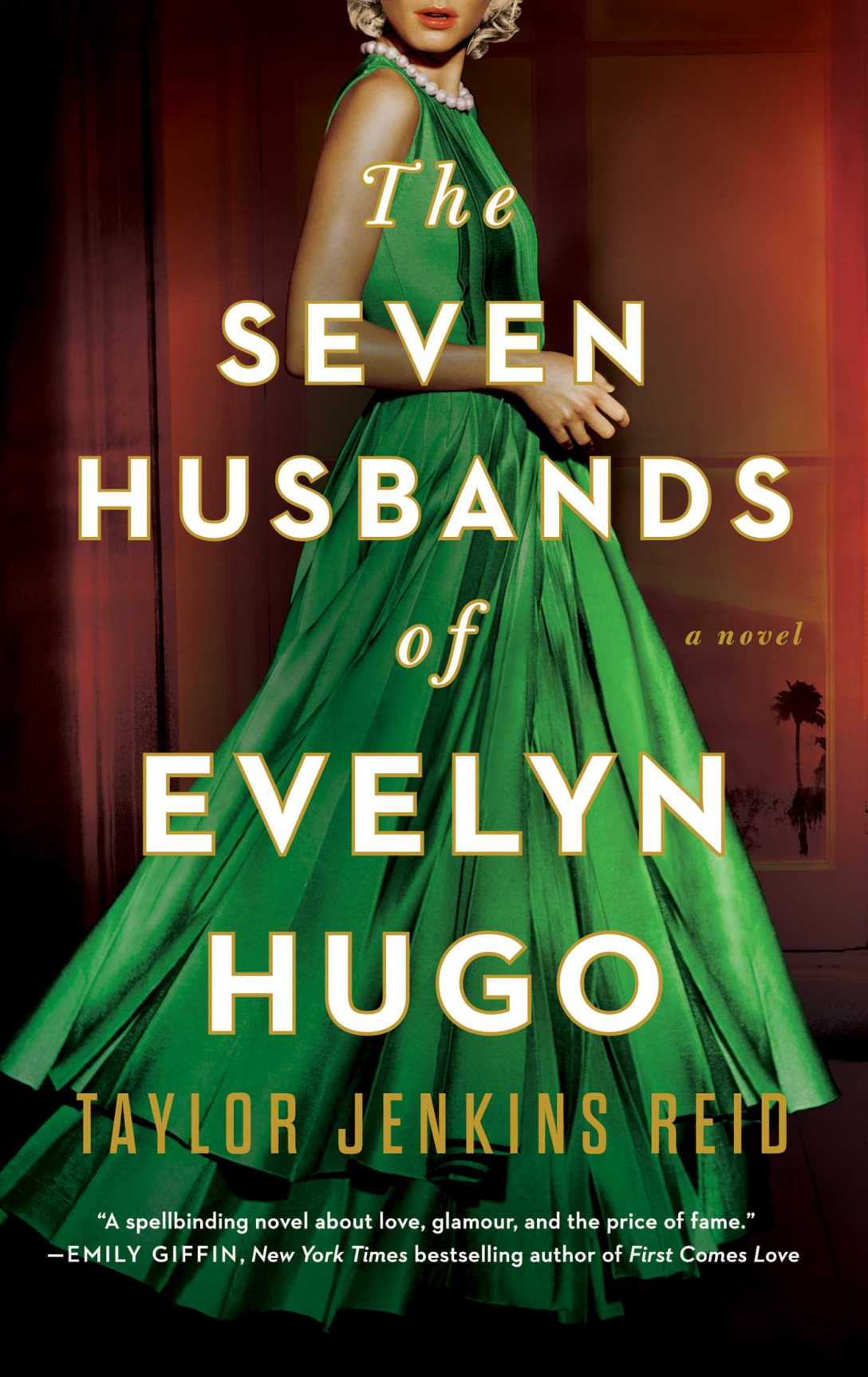
The Seven Husbands of Evelyn Hugo | Taylor Jenkins Reid

The Seven Husbands of Evelyn Hugo
by Taylor Jenkins Reid
Published by Atria Books (2017)
Rating: ***** 

This is a fast book. This does not mean it’s a short read – the page count is 388 (hardcopy) and 304 (softcopy). It’s just an incredibly fast-paced book. Before reading the book, I saw a friend get consumed in it, and she described the writing as “incredibly engaging”, amongst other adjectives. 300-odd pages later, I do not disagree one bit. This is, far and away, one of the best pieces of fiction writing I have read.

The plot, at first glance, doesn’t spark any emotional reaction. It’s about an ageing former starlet, Evelyn Hugo, who, after years of being reticent with the media, decides to grant Vivant magazine an interview – specifically in the context of some dresses she’s auctioning off for charity. Her only condition is that Monique Grant, a relative unknown, is the reporter who interviews her. A few pages later, and Hugo reveals her ulterior motive in inviting Grant to her home – to give Grant the exclusive tell-all and the rights to publish an authorized biography once Hugo dies. What transpires is this narration of Hugo’s life, leading up to the present day. That, however, is barely scratching the surface of it. Through the recount, we explore all the romantic relationships Hugo has had, the headlines she dominated during her heydey, and, in bursts, Monique’s present-day life. Throughout, there’s a sense of foreshadowing that the two women are connected somehow, a reveal which marks a fitting conclusion to the book.

I’m going to review this systematically since a lot of it is very, very fresh in my memory at the moment.

First, the characters. Since a large part of the narration happens in a setting that is the late 60’s/70’s, it’s pretty amazing that Reid weaves in such large amounts of representation into the book, in terms of the communities across the sexuality spectrum that she is able to describe. What’s also phenomenal is the way she introduces and describes her characters. Every character is relevant, and Hugo, the protagonist, manages to have meaningful interactions with each of them – which plays a huge role in plot development, but also in terms of your understanding of context. Moreover, the characters are not one-dimensional. It’s very difficult to use one adjective to describe them, for example. Each character is layered, and their contribution to Hugo’s life is well-explained, in terms of how they affect her thinking, and what her emotions are.

A special paragraph is needed to talk about the two protagonists, if you will. Evelyn and Monique, the two characters whose interactions shape the entire plot are really different from each other. There is a gap both in economic stature and in confidence – a distinction Reid draws within the first 50 pages itself. It is this distinction that enables both ladies to learn from each other. While Evelyn takes on more of a mentor role, it becomes clear that at latter parts of the book, especially towards its conclusion – there are things that she’s picked up from how Monique has responded to the tell-all. Monique’s growth through the story is phenomenal. If Evelyn is the one who is being reflective and assessing her life, Monique learns how to change her life – in terms of being able to put herself and her emotions before others. That emotional growth and maturity is well-traced, and not knee-jerk. Reid’s exposition of Monique’s life is measured and does not feel out of place – which deserves special praise.

Second, the treatment of sexuality, and representation.  I’ve already spoken about how diverse the characters are. What demands more attention, however, is how well she’s able to treat sexuality in the context she sets out. There are several things about an individual’s identity and sexuality that are incredibly confusing to people today – in terms of people exploring their sexualities, or identifying a particular way. It sparks off a lot of conversation – and this is despite our generation being lucky enough to have a lot of information and lesser prejudice than earlier. Reid is able to trace what it would have been like in the late 1900’s, and she’s able to do this in two parts.

The first, is pre-Stonewall, where the story charts the sexuality of several characters and their attempts to keep it secret and conform to the heteronormative expectation that society has for them. There’s also a specific discussion in this time period about bisexuality and it’s misunderstanding – something that stood out in this book. Without spoiling too much, it’s interesting to see that members of the homosexual community themselves didn’t fully understand what being bisexual meant. This is well documented today, but the fact that Reid chooses to give a voice to a bisexual character, engage with the social conflicts the character faces is worth a lot of praise. The second time period the book engages with sexuality in is post-Stonewall, which is a little more liberal, but involves conversations that lead to definitive decisions about coming out.

Finally, Reid deserves congratulations for her construction of family and friendship. If anything, there is a lot of pain in this book. There’s a lot of love, a lot of loss, a bunch of conflict around identity, and a lot of tabloid gossip. Through the recount, Hugo builds up what her friendships did to her, and then descends into a tale of her family. Her relationship with her daughter is so profound and the reactions so natural that you’re on edge to find out how the daughter will grow up. Her narration of “family” breaks away from a lot of traditional notions, and her detailing of the platonic/romantic divide in Hugo’s life leaves you wondering how much of romance today is a socially constructed expectation. Atleast, I was. It makes you ponder about how romantic relationships are treated in society as automatically being a step-up from a platonic one, and how untrue that premise is in reality. There’s one quote about intimacy that particularly stands out to me – in terms of how, more than anything, it’s the ability to be true with someone.

What is touching is her development of Monique’s arc and Monique’s family, and I think the relationship of mother and daughter there is another highlight. Monique’s mother is inserted into the book in just the right places, something I absolutely adored.

I would only dock points for the fact that the book is not slightly longer, for I think the ending (the last 30 pages) were extremely rushed. There is a certain power to the voices, the characters, and the description that Reid is able to weave, one that will linger in my memory for a while. All in all, a fantastic read, well worth the time and investment.

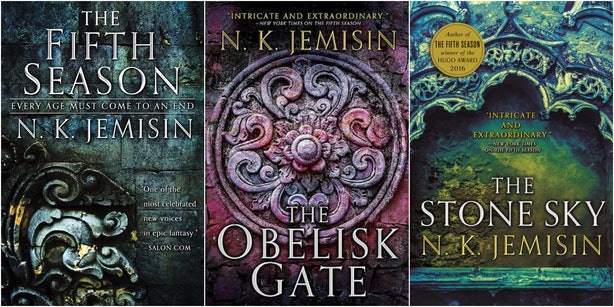
The Broken Earth Trilogy | N.K. Jemisin

The Fifth Season (Broken Earth #1)
by N.K. Jemisin
Published by Orbit (2015)
Rating: ***

The Obelisk Gate (Broken Earth #2)
by N.K. Jemisin
Published by Orbit (2016)
Rating: ****

The Stone Sky (Broken Earth #3)
by N.K. Jemisin
Published by Orbit (2017)
Rating: *****

This year I have several goals I’d like to accomplish with my book-reading. The first, of course, is a target number. What’s more important to me, however, is that I’m able to accomplish reading a diverse set of books over the course of the year. Diverse in terms of genre and in terms of authors I read. And I plan to do this by spending more time searching for books. Additionally, there’s this quest to read authors in full – so I can comment critically on their style of writing. The final desire I have is to be able to critically review books – from a literary perspective, I’d like to understand more about genres and offer more comments on writing.

A small step to that is writing this blog. This context is essential to understand why I read N.K. Jemisin. In 2017 November, I stumbled across Cixin Liu’s Three-Body Problem/Remembrance of Earth’s Past trilogy – which absolutely blew me away. While I was on the Internet, I discovered that Jemisin not only beat Liu’s final installment to a Hugo Award, but bagged herself three consecutive Hugos. That is not an easily accomplishable feat. I have found few Award-winning books to really resonate with me, so I thought I’d give it a shot. This is one of those series’, which for me, built-up over the course of the three books – which is reflected in my ratings of the trilogy.

How do you start to review a series that repeatedly explores the way the world ends?

The premise of the series is intriguing. The Broken Earth trilogy is set on a massive continent called the Stillness, in a far-future Earth wracked with periodic disasters known as Seasons. These Seasons aren’t just bad storms: they’re massive, apocalyptic events that last for generations, reshaping the world and its inhabitants. Those who survive huddle into Comms, protected communities that try to wait out the destruction, then crawl out and rebuild civilization before the next event. There are also remnants of an advanced civilization that persist throughout the destruction: giant, floating crystals called Obelisks.

Among the survivors of humanity are “orogenes,” individuals who can draw incredible magical power from reservoirs of the Earth. But while these orogenes serve a useful purpose for society, their training and treatment is brutal. They’re taken from their homes as children and brought to the Fulcrum, an order that trains and certifies them under the supervision of yet another order, known as the Guardians. When the Seasons come, they’re often singled out for death from Stills, their non-magical counterparts.

Good fantasy is always enjoyable to read because of the origins of thought and premises. In that regard, the series is fantastic. Jemisin is rare in her ability to understand the vastness and scalar nature of time when it comes to geology, but more crucially, is able to apply this understanding to create a sense of linear plot development. Her characters are well-crafted, and the shifting perspectives she provides for the central figures are refreshing and enjoyable, throughout all three books.

My independent assessment of the books, however, largely vary. I believe The Fifth Season was a lot of world-building, which is understandable for a trilogy, but did not create the level of plot engagement that I desired. There’s a lot in terms of plot-line convergence – in that Jemisin tries to reach conclusions to strands of thought that have begun, but in places, the book is agonizingly difficult to read – especially in its description of child abuse. It also made the protagonists difficult to like. If that was a deliberate choice, I think it affected a large part of my reading experience, which reflects in a lower rating.

The Obelisk Gate does a great job of balancing world-building and plot – which reflects in a 4-star rating. I think a large reason why I enjoyed it a little more was also because of the fact that I had context to why the world was so bizarre. If you’re someone who Wikipedia searches for plots and jumps in to the middle of the series, I think it might get slightly difficult to enjoy this one. What I especially enjoyed was the diversity in the cast – something that develops especially here. As a piece of feminist literature, and I use the tag deliberately, the book is able to explain oppression and power-dynamics a lot better than other fictional pieces. It gets you thinking. Being the middle-book, it does a fair enough job of creating longing for the conclusion. I docked points here because the writing and dialogue became boring in parts, dipping in their pace and their efficacy – and I say this as someone who enjoyed Lord of the Rings and other Tolkien works thoroughly.

The Stone Sky is downright incredible. It is the most fitting conclusion to the series, it’s difficult to imagine things ending any other way whatsoever. Jemisin’s writing hits peaks in it’s descriptiveness and it’s sense of apocalyptic society. It mirrors exactly what society is today. If the previous book got me thinking about power dynamics, this book got me thinking about internal prejudices a lot more. The dialogue is extremely powerful – and creates a sense of focus about the human experience and a pleasurable existence, in terms of having a family you love, and a support system that helps you overcome anything in the world. The prose is delightful and enjoyable. The characters make unexpected choices, but reasoned ones – and the reasoning is one that keeps you hooked.

It is, by far the best conclusion to a series I’ve read. I’d recommend the series on the whole – I think it’s worth reading. Fighting breaks in momentum with the first book might take time, but it’s a series that’ll keep you hooked once you start. Every Age must indeed come to an end.