Classes (and Jokes)

I do believe that the faculty who teach us are well aware that we, as a batch in the final semester, are paying very, very little attention to what they are teaching. The subjects aren’t core papers, or as necessary as to amass widespread inherent interest among every student. One would understand the number of students whose interests are captured falling, especially given that we are on the cusp of completing our degree – but they’re dwindling. They’re so low, you can see people falling asleep or deciding to do their own thing in the classroom within 5 minutes of attendance being taken. I digress though. The force of this paragraph was meant to convey that the faculty know this information. They know that we care very little – but that we will pay attention if something is being communicated about portions, internals, or something else that’ll genuinely concern us.

Sometimes they adopt that strategy to get us to look up for a few minutes. Very unexpectedly, someone will say the words “Continuous Evaluation”, and for a couple of minutes everyone’s heads will shoot up. If nothing, to memorize the date when it’s due so you can ask the batch what is actually due the evening before the deadline – sometimes even the morning of. Or they’ll say the word “Internal” and all of a sudden you’ll be awoken from any slumber to try to understand if there’s an added component of work they’re going to make you do in final sem.

Some faculty are genuinely trying. We’re allowed to take laptops into class for drafting, which keeps you interested because there’s a bigger screen to stare at. That faculty is being super innovative. Apart from his usual quirkiness and sharing thoughts of the day with us (which are genuinely nice to watch), he’s been using technology to keep us engaged with what he’s teaching. Even if it doesn’t get the whole class hooked; it’s worth applauding the effort.

Today, however, I saw something that I think I’d like to practice if I ever get a teaching job. The art of the poor joke, executed to perfection. You see, a part of being in the last semester is a bunch of people leaving class citing various excuses – and not returning because there really is no incentive to return once you’ve left and veered out of class. One faculty sensed someone leaving – catching them just as they shut the door, and exclaimed “yeh dekho, pehli wicket gayi”

Now you see; there is no way for me to explain how fantastic her comic timing was on this joke. It was perfect. She also chose a cricket joke – which is universally understood in India. The best part was that she kept following it up with other cricket jokes: she drank water in the middle & called it her “drinks break”, and when she caught someone unsuccessfully sneaking out, she called it a “dropped catch”.

As you can tell, the jokes got worse as the class progressed. Nonetheless, it gave me material for this blog post, and caught my attention sufficiently such that I missed my mid-day snooze.

I wonder what the faculty will try tomorrow.
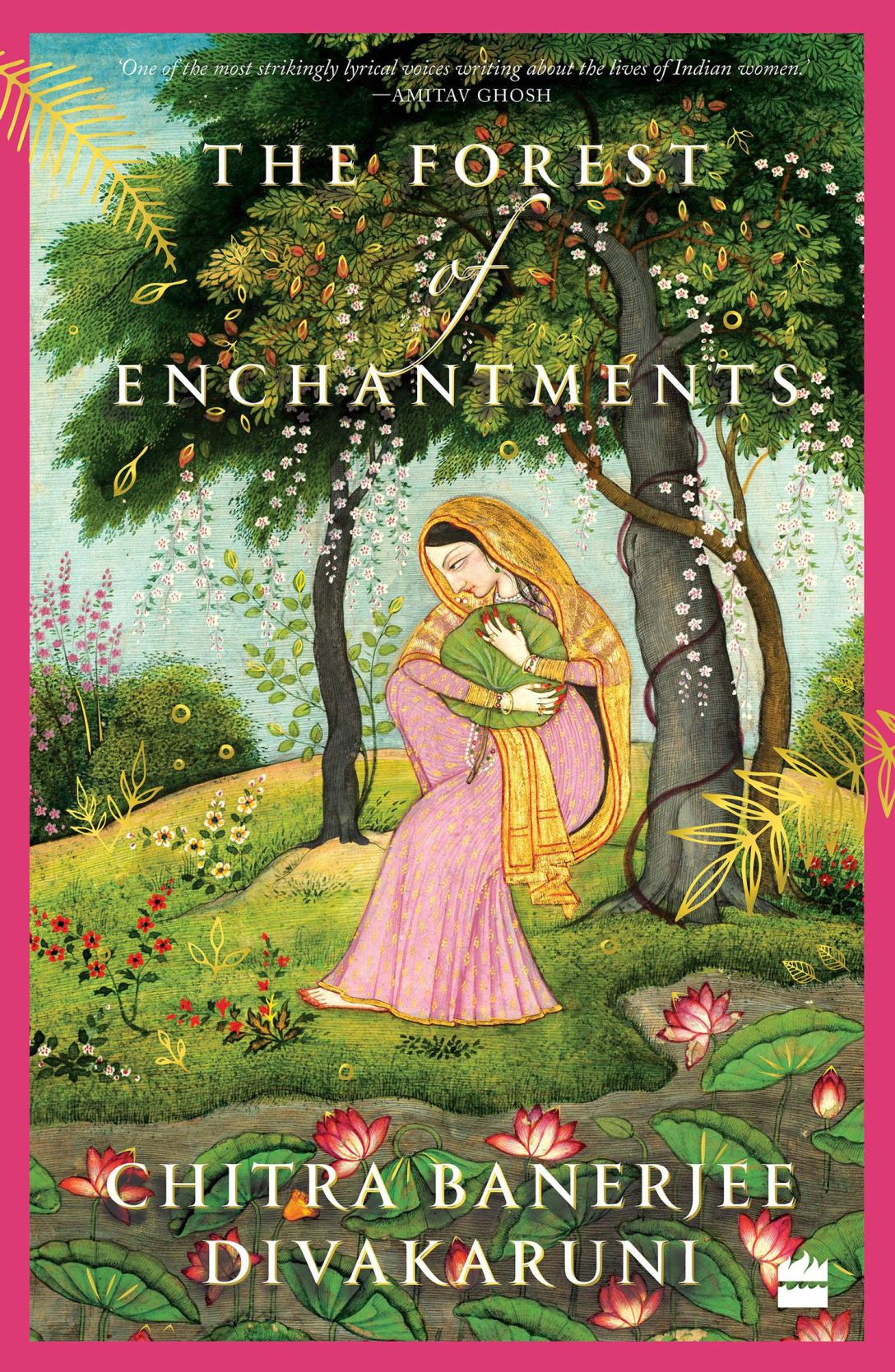
The Forest of Enchantments | Chitra Banerjee Divakaruni

The Forest of Enchantments
by Chitra Banerjee Divakaruni,
Published by HarperCollins India (2019)
Rating: ***** 

I’ve had a soft corner for Divakaruni’s writing since I first came across her work, and the projects she undertook – retellings of Indian mythology. It was this premise that got me hooked almost immediately. Coupled with her simplistic writing and excellent narration, it sowed the seeds for criticism I had of Amish’s later works. Retellings of Indian mythology often suffer from an attempt to try to force new elements of plot onto the reader, or to surprise the reader with information that wouldn’t ordinarily fit into the original tale. Divakaruni does surprise you, but her surprises feel organic, and they align comfortably with characters goals, ambitions, and weaknesses from the original epics – making her retellings believable and more human.

The Forest of Enchantments is no exception. It marketed itself as a retelling of the Ramayana from Sita’s perspective, but the book evolved into so much more as the plot progressed. I believe the book is an exploration of the Ramayana that gives the characters a human voice. The plot is the same as Valmiki’s Ramayana, barring a few surprises when Sita is in captivity. The perspective that Divakaruni offers, however, is one that makes the story a lot more enjoyable. You realize quickly that it is the women of the Ramayana who are ignored throughout the story, and the men who drive the tale with their decision-making and their alpha nature.

Divakaruni plays this to her advantage. It allows her to show the male characters in clear shades of black or white, with decision-making and emotional responses akin to the original epic. However, it gives her the freedom to build on the female characters. Sita, Mandodari, Kaikeyi and Surpanakha. We get to see the shades of grey, the emotional responses that make us, humans, who we are. As Sita is enamored by Ram, so are we, but as Sita agonizes and is frustrated by his decision-making, we are too. We are afflicted by the pangs of desire that Sita’s heart feel. Divakaruni shows us that at the heart of the Ramayana was a love story that forced a constant choice between duty and love.

The most poignant moments come at the end of the book. For me, the conclusion of the book makes it a must-read. The injustice Sita feels has been done to her comes to its fore, and you can relate to the range of emotions she experiences. That’s why this book is beautiful. As compared to the stoic tale the Ramayana is, there’s colour here. The rage of red, and the ache of blue: they’re all portrayed perfectly. I was left pondering how far we go for love, and what love actually deserves.

Some additional comments are reserved for the beautiful cover of the book, and the incredible typesetting. I haven’t been this enamored by a hardcover for a while now, and it will take quite the book to top this one – in terms of look and feel. This is a highlight of my year, and will prompt more reading into Indian mythology, I’m sure.